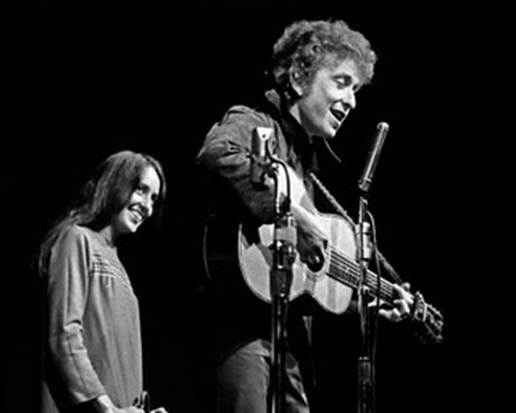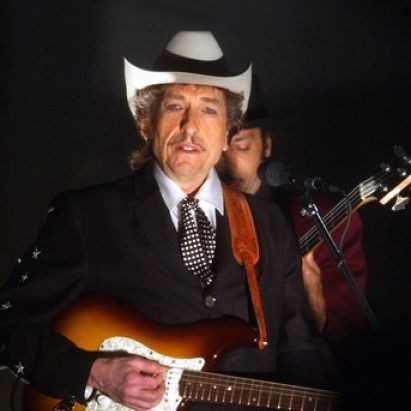
Pete Seeger, 1919 – 2014

Standard

seeger

It’s probably apt that I was thinking about Pete Seeger last night (he shows up in Murray Lerner’s documentary about Bob Dylan, The Other Side of the Mirror, which I watched). In my post last night I called him the “greatest living American”, and then I woke up to learn the sad news that that appellation was no longer fitting.

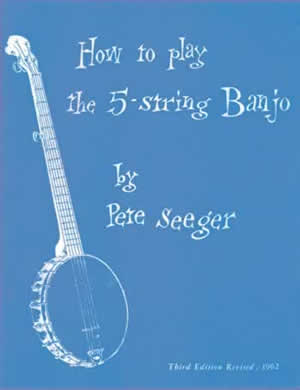
Pete Seeger definitely shaped my life and attitudes much more than Dylan did. Dylan, for instance, never led me to try my hand at guitar, but I own seven banjos and that’s entirely because of Pete Seeger. I bought my first banjo, which is now in my office at the University, in 1992. Actually, my parents bought it for me as a Christmas gift – I just picked it out at the Ottawa Folklore Centre (when it was still on Bronson). When I went into the store to pick one out the guy asked me what kind of banjo I wanted to play. Not being aware that there were multiple banjo styles I think I said “Ummmm”. He asked if I wanted to play bluegrass like Earl Scruggs (which he then demonstrated) or claw hammer like Pete Seeger (which he could also play). “Seeger,” I assured him, “I want to play how Pete Seeger does”. So I bought the banjo and Pete Seeger’s How to Play the Five String Banjo book and tried to teach myself how to play. Anyone who has ever tried to self-learn the claw hammer strum in the pre-YouTube days will know how impossible that is. It took me almost twenty years before I found Barry Luft, and he taught me how to actually play the instrument properly.
BK---PS01

Pete Seeger made me want to play the banjo because he made the banjo look like the coolest instrument in the world. “This Machine Surrounds Hate and Forces It To Surrender” he had written on his banjo. How unbelievably cool was that? Seeger seemed like a man who done it all and seen it all and come through it all with a sense of optimism about the human spirit that was nearly unparalleled. He was saintly, but in all the best ways.

AB80E5662-940x626

I never met Pete Seeger, though I saw him play live a number of times. I visited Beacon, NY once, but he wasn’t protesting that day. I have a friend who owns an island in the Hudson River not far from where Seeger lived. Seeger dedicated a few decades of his life to helping the cause of cleaning up the Hudson. My friend, who is a bluegrass banjo player (but don’t hate him for it), wrote a letter to Seeger, asking permission to rename his little island Seeger Island, explaining that they were both banjo players, and that my friend felt he should be honoured for his contributions to saving the river. Seeger wrote him back, of course, and, naturally, declined. I read that letter, in which he explains that nothing would make less sense to him. He offered two suggestions: name the island with a word from one of the tribes who originally owned that land, or, failing that, invite a class full of local school children to the island and let them decide on the name. It was the most Pete Seeger-ish thing I have ever read.

Reading Twitter and FaceBook this morning I was struck by how many Seegers there were. There are the people who remember him from “Little Boxes”, or his children’s songs. There are people posting links to his work with The Weavers. Friends on the left are posting “Which Side Are You On?” and “Talking Union”, while others are posting his anti-war and civil rights material. Some remember him only because Bruce Springsteen remembered him, and that’s fine too. For me it’s the Seeger of American Industrial Ballads that I like best, but, really, I love them all. I love that when he appeared on The Smothers Brothers show, putting an end to fifteen years of blacklisting, he was so uncompromising and simply picked up the protest where he’d never left it off.

If you’re only somewhat familiar with Seeger, do yourself a favour and watch the 2007 documentary Pete Seeger: The Power of Song. It will fill you in on what a great life the man lived, and what a powerfully positive attitude he had. The story of the time he converted his own assassin to his way of thinking is one of the most remarkable stories you will ever hear, a story full of the hope that music can change minds.
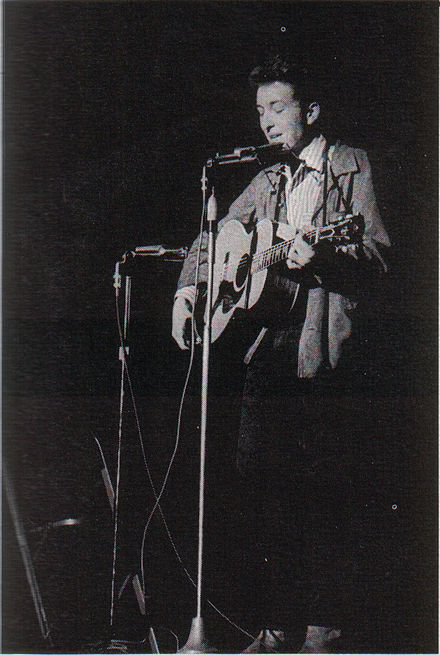
Bob Dylan at the Newport Folk Festival

Standard

OLYMPUS DIGITAL CAMERA

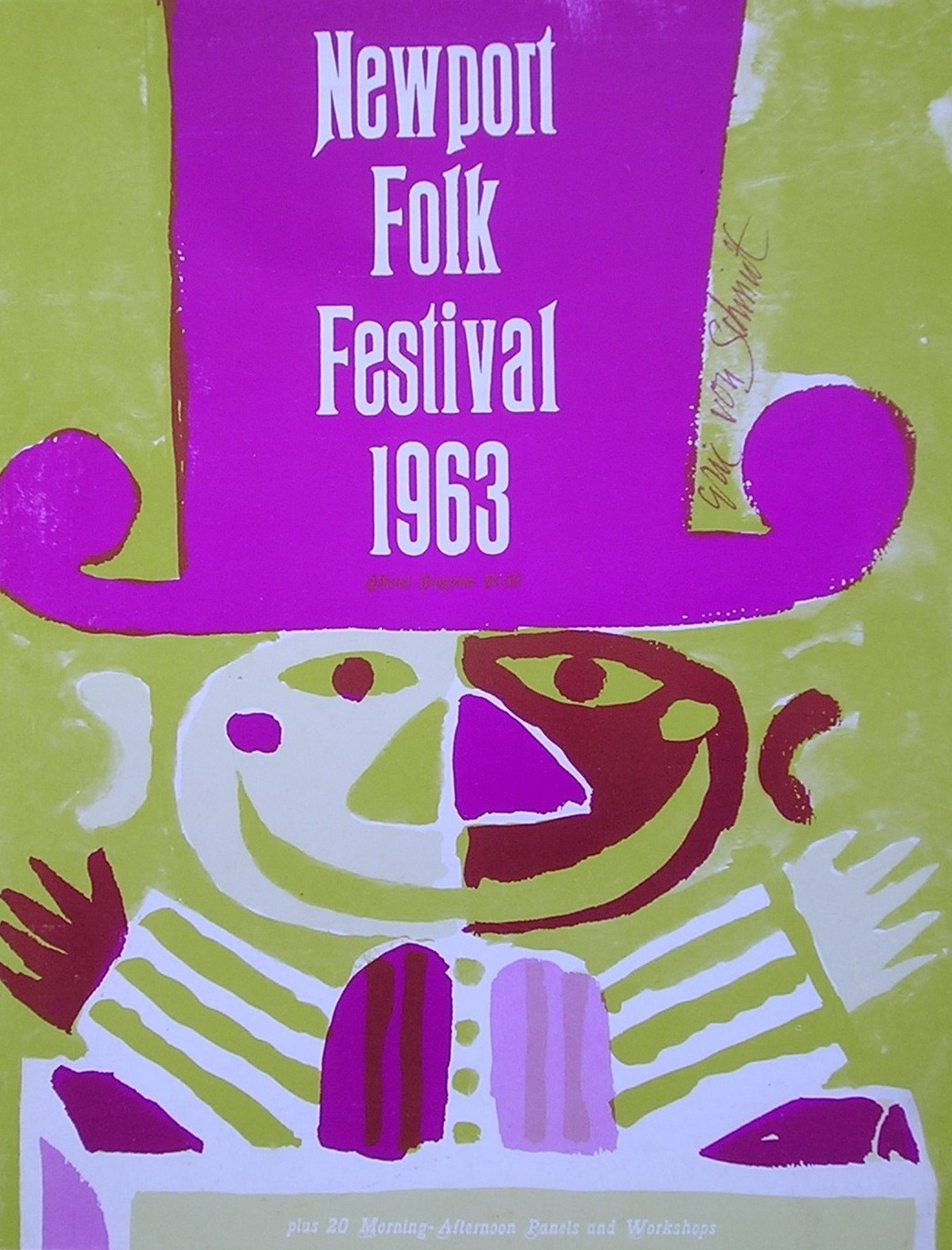
I put off watching Murray Lerner’s documentary, The Other Side of the Mirror: Bob Dylan Live at the Newport Folk Festival, because I was trying not to skip ahead and the film covers all three of his earliest Newport appearances (1963, 1964, and 1965) in just ninety minutes. As it turns out, I could have risked it – Lerner separates all three years into clear sections. Of course, watching it that way would have been to miss the point entirely.

The Other Side of the Mirror is a remarkable film. The transformation of Dylan over the course of just two calendar years – reduced here to an hour and a half – is nothing short of startling. The film opens with Dylan in a work shirt sitting on stage singing “North Country Blues” surrounded by Doc Watson, Clarence Ashley and Judy Collins (none of whom are identified – there is no voice over and no titles). He’s the great young hope of the folk movement already, joined by Joan Baez for “With God On Our Side” (which nicely segues into an evening performance of the same song by the same couple). “Who Killed Davey Moore?”, “Only a Pawn in Their Game” and other earnest songs follow. The year concludes with Dylan leading Baez, Pete Seeger, the Freedom Singers and Peter, Paul and Mary in a version of “Blowin’ in the Wind”. He was clearly a star on the rise, and he took control of the festival.

440px-Bob_Dylan_in_November_1963-2

The 1964 section opens with him performing the as-yet-unrecorded “Mr. Tambourine Man” on a daytime stage in front of Pete Seeger. Already he was changing the definition of folk music. The section ends with a joyously smiling Dylan singing “Chimes of Freedom” to a roaring crowd – they simply refuse to allow Peter Yarrow to introduce the next act (poor Odetta…) chanting “We Want Bob!” while Yarrow desperately tries to tell the crowd “We’re sorry but that’s all there is”. Here Dylan was everything that they could have ever wanted in a folk star.

For 1965, we begin with an afternoon performance of “If You Gotta Go, Go Now”, a jokey song that generally got big laughs in Dylan’s 1964 performances. He recorded several rock-ish versions for Bringing It All Back Home, but none of them made the album. He also does acoustic versions of his new material (“Love Minus Zero/No Limit”) before heading into the epoch defining evening set. Dylan looks likely a totally different person now – not just because of the leather jacket and shaggier hair, but he simply looks older, more mature, more sure of himself.

Dylan and the Butterfield Blues Band (minus Paul Butterfield) did three songs that night: an extremely good version of “Maggie’s Farm”, “Like a Rolling Stone” (which had just been released as a single) and “Phantom Engineer” (the last, sadly, is not on the film) before being booed off the stage. You can read all you want about the show, and all the mythology that surrounds it, but it really is necessary to hear for yourself the booing. Revisionists have argued that the crowd was reacting to a bad sound mix – but that mix was nowhere in evidence in the recordings. It’s the music that they hated.

(I must add: In No Direction Home Pete Seeger swears that it was the mix that was the problem, not the band. As I believe that Pete Seeger is the greatest living American, I am obliged to at least imagine that he wouldn’t lie to me about that.)

FOFM-Bob-Dylan-Pete-Seeger-Newport-Folk-Festival-1963-Newport-R.-I.-M4271-21-A115-NFF63Folk14-Edit

Pity poor Peter Yarrow, desperately trying to calm the crowd again after Dylan leaves the stage – wiping flop sweat from his eyes, assuring the crowd “He’s gone to get an acoustic guitar”. He plays “Mr. Tambourine Man”, the 1964 novelty, to great appreciative applause from the crowd, who clearly feel that they have defeated his rock and roll intentions. That version of Dylan, already long gone now, gives them just two songs. He wraps his folk career up with a lamenting, heartfelt version of “It’s All Over Now, Baby Blue”. I have to say, if I’m ever chased off stage by an audience that just doesn’t get what I’m trying to do, I hope I have a comeback that is one billionth as pointedly sharp as this one. It’s a song meant to break your heart and nothing could have better put that crowd in its place. Lerner cannily ends his film with an image of Dylan’s abandoned mic stand as the crowd roars its approval of his performance. Winning the battle, losing the war.

61bca522e9f24a7861cab4cfc2daf1bc

The whole thing is astonishing, particularly if, like me, you’ve spent the last three weeks listening to these recordings. The difference between hearing and seeing is so important. While Dylan and Baez sing “With God On Our Side” three times here, it is only by watching that we see the change in Dylan’s demeanour – the smile that crosses his lips in 1964 that tells you he doesn’t really believe it any longer. It’s the smile of a young man who already seems to know that he’s reached the end of this particular line.

What is amazing about Dylan’s folk period is that it lasted only to July 1965. Four and a half years as a performer, and he completely changed the entire scene. His insistence on personal expression – at the expense of tradition – fundamentally reset the game. His performance of “Chimes of Freedom” in 1964 changed it just as much as the appearance of the Butterfield Blues Band did the next year. Dylan didn’t introduce the concept of stardom to folk music, he just perfected it. The Other Side of Mirror shows just how quickly he passed through and out of the scene.

Dylan didn’t perform at Newport again for thirty-seven years. I’ll talk about that in as many weeks. Until then, “It’s All Over Now, Baby Blue”

Bob Dylan and the Velvet Underground

Standard

image002

Bringing It All Back Home could have been a much different album. Dylan recorded alternate takes of most of the first side cuts and could have released a solo acoustic (or minimally adorned) version of the entire thing had he wanted to do so. Some of those versions are just as good as the tracks that wound up on the album. “Maggie’s Farm”, which was recorded in one take, would have been left off, but that might have opened up a slot for “I’ll Keep It With Mine”, one of the better songs that Dylan never put on a studio album.

Recorded by Dylan in January 1965, “I’ll Keep It With Mine” was released later in the year as a single by Judy Collins. Apparently Collins believed that Dylan had written the song for her. Other sources suggest that it was written for Nico, who Dylan had met while in Europe in 1964. Nico recorded it on her debut album, Chelsea Girl, in 1967. It is entirely possible that Dylan told a lot of people he wrote the song for them…

Re-listening to the Nico version of the song, I am struck by the early connection between Dylan and The Velvet Underground through Nico. I will admit that I first started thinking about this project when Lou Reed passed away last year. Reading the many posts of my friends on FaceBook and elsewhere I was struck by my inability to really put my interest in Reed’s work into words, and I remember thinking “How are you ever going to be able to say anything when Dylan passes away, if you can’t wrap your head around Reed’s impact on your life?”

For me, Lou Reed was the singer-songwriter who dethroned Dylan. There came a moment in my high school days when all of my friends transitioned into listening to the Velvet Underground, as they traced their New Wave roots backward through time. The strong consensus was that the Velvets were great for all the reasons Dylan was lame. They were hard, he was soft. Over the next few years I would convince myself that they were right.

While Dylan and Reed would become friends in the 1980s (Reed would play Farm Aid, and the 30th Anniversary Show, for example), they seemed really distant in the 1960s. Andy Warhol apparently tried to court Dylan’s interest in the Velvets, but unsuccessfully. Reed railed against Dylan publicly.

Still, Nico reminds us that they could have been a lot closer than they were had things worked out even slightly differently. And on the Bringing sessions, there is a version of “She Belongs To Me” that sounds so much like Lou Reed that it is kind of weird: Dylan does the talk-sing thing that Reed did so well, and the spare guitar in the background is reminiscent of a lot of what Reed would later do.

They don’t seem to have crossed paths much during this period, but it would have been interesting if they had.

I can’t find a link to the version that I’m listening to (alas), but here’s a solo version of “She Belongs To Me” from Manchester on the 1965 tour. It doesn’t sound like Lou Reed, but it does sound quite different than the recorded version with the backing band.

Bringing It All Back Home

Standard

Bob_Dylan_-_Bringing_It_All_Back_Home

Released in March 1965, Bringing It All Back Home was the first Bob Dylan album to crack the top ten. It is a self-consciously two-faced album. The seven songs on the first side recorded with a backing band would anticipate the break that Dylan would have with the folkies come summer, while the four solo acoustic songs on side two would wrap up a transformative career in folk music.

Let’s start with side two. This is as great a side of an album as you’re going to find anywhere. Four songs, and they’re all fantastic. “Mr. Tambourine Man” is a song that Dylan had been performing for the better part of a year when he released it. Recorded for, but not used on, Another Side of Bob Dylan, this is a truly transformative pop song, stretching the limits of what could be done lyrically with the format. Already a hit for The Byrds by the time the album came out, this is one of Dylan’s most iconic songs.

“Gates of Eden” is another masterpiece that Dylan had been performing for quite some time, one of the most beautiful songs he’s ever written. In late 1964 Dylan was introducing “It’s Alright, Ma (I’m Only Bleeding)” with the subtitle “It’s Life and Life Only” (a line from the song). Another hauntingly apocalyptic song, Dylan would do a number of fantastic electrified versions of this in the years to come. Finally, “It’s All Over Now, Baby Blue”. This may be my favourite Dylan song of all time. I’ll talk more about this in a couple of days, but I’ll just say that I’ve never heard a bad version of this song. Those four songs are all A+ material. The mark of a man who is breaking with the musical traditions that made him a star by elevating the folk song to the status of art.

The first side, with its backing band, is not as good. Not bad, per se, but just not as good. We’re still listening to the rock star in a gestational period. “Subterranean Homesick Blues”, Dylan’s first single to crack the top forty, is monumental. “She Belongs To Me” is solid, and “Maggie’s Farm” (recorded in just one take) is tremendous. “Love Minus Zero/No Limit” is really strong, though, again, he’d later do better versions of this later in his career. The remaining three songs on the first side (“Outlaw Blues”; “On the Road Again”; “Bob Dylan’s 115th Dream”) are just sort of there. “115th Dream” is further proof that when Dylan put his name in his songs, they generally underwhelmed.

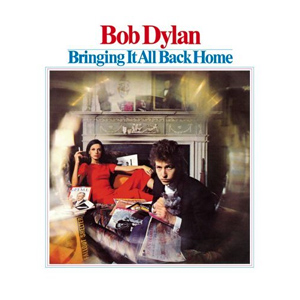
The album’s cover photo, by Daniel Kramer, may be his best, and was one of his most studied. Strongly staged with the album covers and magazine images, with Sally Grossman, the wife of his manager, Albert Grossman, in the background, the image has been mined for its significance by Dylanologists for a long time


The Poet and His Mistakes

Standard

tumblr_lm4kc00Ogg1qearaqo1_1280

“Yippee! I’m a poet, and I know it

Hope I don’t blow it”

That’s Bob Dylan on “I Shall Be Free no. 10”, from Another Side of Bob Dylan. Another Side really is the album where the poet blows it. There are three absolutely awful songs on this album, and now that we’ve reached the end of 1964, I can’t put it any other way – even Dylan was fallible. Perhaps, Dylan was especially fallible.

We spent the day snowboarding in Fernie, BC today, and I had time to listen to every single Dylan 1964 recording I had one last time. I set the playlist to go at the beginning of the day and didn’t skip anything (too much hassle to take off my gloves, unzip the jacket, turn on the phone – hit skip…). One final chance to make an impression.

Nope.

Here are the three songs that just absolutely do not work.

“I Shall Be Free No. 10”. A disaster. As Dylan moved towards the impressionistic lyrics that would define his mid-1960s period, there was inevitably going to be some trial and error, but there was no need to put it out on the album. This is a potential six way tie for worse verse of all time, but let’s give the nod to this rumination on the greatest boxer of all time:

I was shadow-boxing earlier in the day

I figured I was ready for Cassius Clay

I said “Fee, fie, fo, fum, Cassius Clay, here I come

26, 27, 28, 29, I’m gonna make your face look just like mine

Five, four, three, two, one, Cassius Clay you’d better run

99, 100, 101, 102, your ma won’t even recognize you

14, 15, 16, 17, 18, 19, gonna knock him clean right out of his spleen

That probably only narrowly beats out:

Well, I set my monkey on the log

And ordered him to do the Dog

He wagged his tail and shook his head

And he went and did the Cat instead

He’s a weird monkey, very funky

I get the fact that some of these songs might not have been written while sober, but presumably they were released in the cold hard light of day.

“Motorpsycho Nitemare”. This is a story song in which Dylan is at a farm, pretending to be a doctor, milking the cows and singing about Tony Perkins and Fidel Castro. It concludes:

Me, I romp and stomp

Thankful as I romp

Without freedom of speech

I might be in the swamp

 Finally, “Ballad in Plain D”. This is the worst song Dylan has written so far in this project, and it’s going to be tough to top for worst of all time. Basically a rewriting of the traditional English folk tune about lost love, this song details the final night of Dylan’s relationship with Suze Rotolo. His biographers all point to a knock-down drag-out fight between Dylan and Carla Rotolo, Suze’s older sister. People were called to intervene. It sounds like an ugly scene. It is a ridiculously ugly song. Dylan is abusively uncharitable, mean spirited and self-pitying. It sounds like exactly what it is: the raw nerved ramblings of a bitter and immature twenty-something going through his first real break-up. Even the meter is off in several places. If it was therapeutic to write, it probably shouldn’t have been recorded, and it certainly shouldn’t have been released.

Another Side of Bob Dylan has some great songs (“To Ramona”, “I Don’t Believe You”) but it also has some dreadful ones. Listening to both this and The Times They Are A-Changin’ in quick succession today, it is impossible not to note how much stronger Times is in almost every single respect. That’s the last Dylan folk album and it is Dyaln in total control of his craft. Another Side is his first rock one (although it is not yet rock) and he is not yet sure in what he is doing The birth pangs are pretty pronounced.

(Photo not from 1964, but how could I possibly not use it?)

Bob Dylan’s Privacy

Standard

esq-dylan-large

Reading the excellent Tom Junod article on Dylan’s sense of privacy in the new Esquire. Wilco’s Jeff Tweedy said what I wanted to say about Newport so perfectly:

“We played with McCartney at Bonnaroo, and the thing about McCartney is that he wants to be loved so much,” Jeff Tweedy says. “He has so much energy, he gives and gives and gives, he plays three hours, and he plays every song you want to hear. Dylan has zero fucks to give about that. And it’s truly inspiring. The joke on our tour was that his T-shirt should say PISSING PEOPLE OFF SINCE 1962. If you dropped people out of a vacuum from another planet and planted them in a field somewhere so that they could study us, and there’s a guy half-decipherably singing jump-blues songs almost in the dark, and there’s people watching him—well, it wouldn’t make any sense….”


Newport Folk Festival, 1964

Standard

tumblr_lp4kc2sdXr1qecpfvo1_500

People get really upset when they go to see a band and they don’t get to hear the hits. Some of them get impatient and  start yelling out the titles, as if the band doesn’t know which songs are the popular ones. They fume if they don’t get the hits at all (I left a Bob Dylan concert once and heard someone in the parking lot complain that he had played only obscure material on a night that he had performed probably eight tracks from his greatest hits albums). Dylan certainly could provoke people this way.

Dylan’s setlists at the Newport Folk Festival in July 1964 were not aimed at pleasing the crowd. It’s wasn’t as bad as the next year, when he would show up with a band in tow, but it was a remarkably hit free show. I am a little confused about what exactly he played and when (I received a dvd of The Other Side of the Mirror yesterday, but am not going to watch it until next week, maybe it will straighten me out), but it is clear that most of what he performed for the crowd were new songs.

On the evening of July 26, for example, Bjorner.com has him playing three songs from Another Side of Bob Dylan (which was not yet recorded nor released), “With God on Our Side” (with Joan Baez), and “Mr. Tambourine Man” (which wouldn’t be released until Bringing It All Back Home in 1965). At other sessions during the festival he did another version of “Mr. Tambourine Man” and “It Ain’t Me, Babe”, also from Another Side of Bob Dylan.

Listening to the recordings, it is clear that the crowd is appreciative, but they don’t seem enraptured (it’s hard to tell how well the crowd sound was mic’ed though…). Dylan was in the process of not giving them what they wanted. All the biographies agree that the old line folk writers at the magazines were critical of his sets (too personal, not socially engaged, not traditional). Dylan simply advanced the break that was coming. Another Side of wouldn’t cause the inevitable rupture, but it signalled its inevitability and he gives them this material rather than his “voice of a generation” hits.

As for the recordings, a nice version of “It Ain’t Me, Babe” with Joan Baez, but an absolutely off-putting “All I Really Want To Do” where he yodels too much to open his set on the final evening. That yodelling has to go, because combined with his refusal to really give his audience what they would’ve expected, it was semi-fortuitous that they didn’t turn on him a year early.

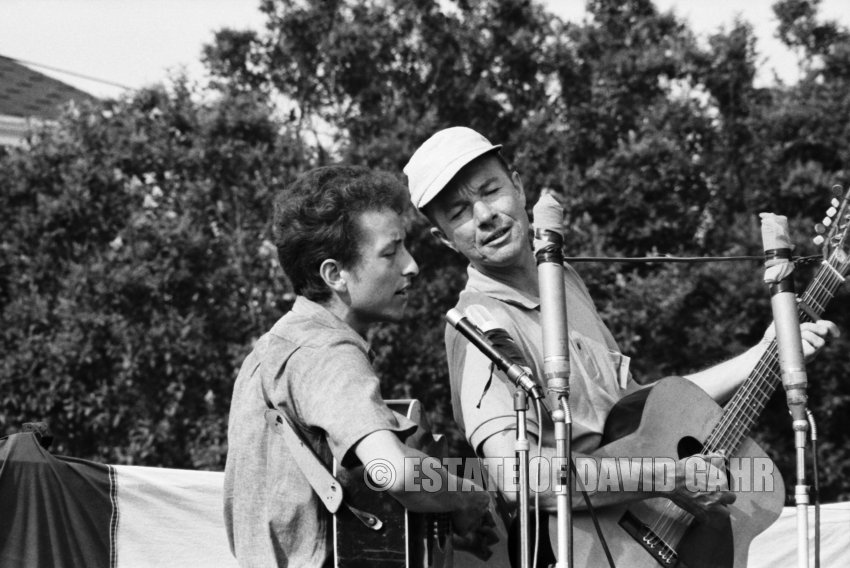
Here he is playing “Mr. Tambourine Man” at an afternoon workshop. I love Pete Seeger sitting there in the background.

Bob Dylan, Poet

Standard

bob01-02

You really should watch Bob Dylan’s appearance on the Steve Allen show from February 25, 1964 (shortly after he appeared on CBC’s Quest). Not just for Dylan’s performance of “The Lonesome Death of Hattie Carroll”, but for how utterly, totally bizarre the interview is. Allen introduces Dylan, throws to commercial, comes back, reintroduces him, reads a review, asks him a question, reads one of Dylan’s poems, and then asks him about Hattie Caroll – suggesting that Dylan tell the audience about her, which, of course, is what the song does. Allen seems totally lost: “Well, I imagine the song tells it’s own story,” he says. I think talk show prep left a little to be desired in the early 1960s.

What is striking, though, is how hard Allen pushes him not just as a singer-songwriter or folk star, but very consciously as a poet. Allen calls him a poet, quotes a review that calls him a poetic genius, and then actually reads Dylan’s poetry aloud himself. By 1964 Dylan was self-consciously positioning himself this way, not simply in the way that he was using Rimbaud-ian imagery in his songs, but through the inclusion of things like “11 Outlined Epitaphs” on the back cover and insert on The Times They Are A-Changin’ (my insert, by the way, is gone from my vinyl copy – I had to read the text online).

Dylan wrote poetry earlier – he ended his Town Hall concert in 1963 with “Last Thoughts on Woody Guthrie” and apparently wanted to include that reading on a potential live album in 1964, which became a stumbling block with his label. I have a tough time gauging his non-musical verse. It can be quite evocative, but it mostly leaves me cold in comparison to his songwriting.

There is an argument to be made (and it has been made) that the collapse of poetry as a popular art form owes a great deal to Dylan and Paul Simon and Leonard Cohen raising the stakes in pop music by incorporating poetry into their songwriting. The turn towards difficulty, abstraction, and conceptualism that marked poetry over the past half century can be read as a reaction to the appropriation of lyrical poetry by pop music. As a certain kind of poetry moved into the university’s creative writing programs, popular verse moved into the musical realm. The combination of music and poetry had been one of the goals of the Beats, of course, and when Dylan and his colleagues began to achieve it, it forced the poetic avant grade to move towards non-expressive forms. I’m simplifying horribly, of course, but it is striking how far the cutting edge of poetry in the late-1960s and after would move away from the types of things that Dylan and Simon were able to write.

Every year now Dylan is mentioned as a potential Nobel Laureate for his poetry, by which the critics usually mean his songwriting. It always seems like a long shot to me, but I do think that his impact on the world of poetry has been profound – not simply because people followed his example, but because an even greater number of poets ran from it.

Here is Dylan on Steve Allen found on Facebook – you might need to be registered on Facebook to be able to watch this.

Another Side of Bob Dylan

Standard

bob dylan another side

On New Year’s Day I hauled all of my vinyl Bob Dylan albums out of storage. We don’t own a turntable at the moment, but I thought it would be a good start to the year to go out into the garage and track them all down. As they’ve been through a number of moves – and since we don’t actually play them – they’re no longer in any order, and I had to flip through all of the boxes. I was surprised not to find a copy of Another Side of Bob Dylan, the second album that he released in 1964. I figured maybe it got lost somewhere along the way.

Three weeks later I know why I didn’t find it: I had never, ever, listened to this album before Sunday when I started playing Dylan’s 1964 output. I am completely positive that there are songs on this album that I had never heard in my life.

I don’t think I was expecting that.

Now I’m trying to figure out why I would have skipped it. The most likely reason is that buying albums in the 1980s was a bit hit and miss, and it’s possible that I never saw it for sale when I was buying the other Dylan albums of the period. Of course, it’s also possible that this was a conscious decision. The album doesn’t have very many of his “big” songs, and the ones that are on here (It Ain’t Me Babe; All I Really Want to Do; To Ramona) are all on Biograph in one version or another. It’s possible that, owning Biograph, I felt no completist need to pick up an album for things like Motopsycho Nitemare.

Having listened to it a few times now, I don’t feel like I was missing all that much. Dylan recorded this in a single day (June 9, 1964) in very few takes (To Ramona and All I Really Want to Do are both the first and only takes recorded of those songs). The good songs here (which would also include Chimes of Freedom) are all really good – but few of these versions are the really great versions. In many ways, this feels like a bootleg that has been released. You can hear Dylan laugh during his performance on two different cuts. The whole thing feels rushed and premature. One of the most remarkable things about it is that Mr. Tambourine Man was recorded (twice) during this session, but was left off the album. That one of his biggest hits was pushed back to the next album (after becoming a sensation for the Byrds) is indicative of how little thought seemed to go into the track selection.

The album is the transition into Dylan’s rock mode. It’s not a rock album – Dylan plays solo on all of the songs (and solo piano on Black Crow Blues) – but the best versions of every one of these songs is a live rock version. The album didn’t do well for him – he was still a folksinger in the eyes of the public – and these songs were far too personal. It never even cracked the top forty. It also contains a high number of duds: Black Crow Blues, I Shall Be Free No. 10 (which is dreadful), Motorpscyho Nitemare (same), and Ballad in Plain D, which might be the worst thing that Dylan ever recorded (I want to say more about that tomorrow). All four of these songs have never been played live, which shows how little faith Dylan had in them.

All in all, it’s a bit of a tough album to sit through. The best parts simply remind me of better versions, and the low points are really quite low. Not sure how my teenage self knew that, but I saved myself ten dollars that I probably would have regretted spending.

“All I Really Want to Do” was the first song on the album. Here’s the version from Newport 1964:

A Ruling From the Eight Year Old

Standard

image002

“This isn’t Bob Dylan,” said my son in the car on his way to swimming class.

“No,” I told him, “it’s Joan Baez. She was his girlfriend.”

“Only Bob Dylan. All year. You said.”

“Well,” I countered, “he’s playing the harmonica.”  We were listening to “Silver Dagger”, the lone Baez solo song on Bootleg Series 6: Live from the Philharmonic Hall.

“It only counts if Bob Dylan is singing.”

Sebastian is interested in the Dylan project even when he is flummoxed by it. Later on the same trip he complained that we’d already heard one of the songs and I told him that this was a live version.

“It all sounds the same. Same same same” he said.

“Then why did you complain about “Silver Dagger”?,” I asked.

“Not Dylan. Doesn’t count.”

He’s right, of course, a lot of it does sound the same. But a lot of it does sound different. Listening to the live performances is all about the tyranny of little differences.

Some of the material plays well on repeat, others not so much. On Bootleg Series 6 Baez and Dylan absolutely massacre “Mama, You Been On My Mind”. They are out of sync. They can’t agree on the lyrics. You can hear Dylan telling them to her mid-song. It’s a debacle, but a charming debacle. The audience finds it cute in its spontaneous genuineness. So did I the first time. Third time through I can’t listen any longer. Charming quickly becomes cloying and I thumb to the next track.

Good show generally. Nice to capture Baez and Dylan together on the downswing of their time together in the fall of 1964 (the rupture would come six months later in England).

“Same same same,” says Sebastian.

I can’t find any footage of the Philharmonic Hall show, so here’s Baez’s version of “Silver Dagger”, the first track on her first album.