The Last Waltz

Standard

54475_10151216041018872_217811581_o

Martin Scorsese is probably something of a genius. Maybe you already believe that, but given his recent run of films it is something that I think must be very much up in the air. Back in the 1970s, though, his genius-ness was not really in doubt, and The Last Waltz is a very nice piece of proof.

The Last Waltz took place on Thanksgiving 1976, which makes it last week’s subject, and the film was released in 1978, which makes it next week’s subject. I’m splitting the difference and writing about this week (1977) because otherwise I almost have to let the blog go silent for a week. Check out Bjorner’s page for 1977. Actually, don’t bother, here is the whole thing:

March     Sara Dylan files for divorce.

March     Dylan provides back-up vocals for Leonard Cohen

September   Dylan leases Rundown Studios in Malibu

October    Allen Ginsberg interviews Dylan

December   Jonathan Cott interviews Dylan

December  Rehearsals for the 1978 world tour start

That’s not much for blogging. So I’m putting The Last Waltz in here even though it’s against the rules. Sue me.

Let’s start with the Dylan section, since this is his blog. Dylan came out and did six songs at the end of the show: “Baby Let Me Follow You Down”, “Hazel”, “I Don’t Believe You”, “Forever Young”, “Baby Let Me Follow You Down” (again), and “I Shall Be Released”. It was a logical series of songs to play. “Baby” and “I Don’t Believe You” were staples of the Dylan/Hawks tour in 1966, and are seemingly required to be here. “Hazel”, from Planet Waves, is one of the least played Dylan/Band collaborations. Indeed, Dylan’s own site lists him performing it only seven times ever (in 2004 and 2005), but doesn’t list this version for some reason. “Forever Young” is the sort of thing that you probably have to play at a show like this, and “I Shall Be Released”, as the great big group sing-a-long, has an aura of inevitability.

url

Of these six, only the final three make it into the film. Apparently there were backstage negotiations about whether or not Dylan’s performance was even going to be recorded. He thought it would compete with Renaldo and Clara, and so didn’t want the footage shot. They compromised on half with the agreement that the film would only be released after Renaldo and Clara. Of course, Dylan’s film was a complete bomb, and The Band’s film is hailed as one of the most important concert documentaries ever. Probably because Scorsese is something of a genius.

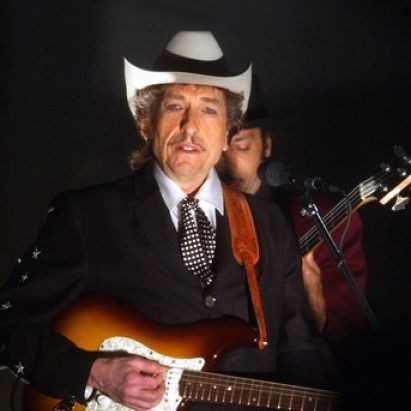
Sticking with Bob just a moment longer, it is a shame that the whole twenty-five minutes couldn’t have been in the film. He and The Band were on fire here. The first version of “Baby” is better than the second, and it bleeds directly into “Hazel” without even allowing a time for the audience to applaud. Dylan strides around the stage full of confidence, and looks like he’s having a great time. This is months after the end of Rolling Thunder, and he is a different performer than he ever had been with The Band before. The universal sense is that he was considerably more comfortable on RTR than on the 1974 tour, and he evinces a lot of that confidence here. The Dylan section is one of the highlights of the whole thing. Even despite the hat.

bob-dylan-last-waltz-1976

A lot of the rest of the film also has highlights. There’s a great deal to like in this film. Greil Marcus’s review of the concert had not been very positive, but his review of the film was effusive. Listening to the bootlegs, it does seem that a lot of the crap in the five hour plus show was jettisoned, because Scorsese is something of a genius. Among the highest points for me are Joni Mitchell doing “Coyote”, a song that she was writing and re-writing on the Rolling Thunder Revue, so one that I had just read a lot about in Sloman’s tour diary. “The Weight” with the Staples Singers during rehearsals, which seems to be just about one of the most profound pop songs ever in that recording. Neil Young, stoned out of his head (apparently they had to rotoscope a chunk of cocaine out of his nostril – now you can do that digitally) looking like he’s going to fall over and then hitting a perfect “Helpless”. Eric Clapton breaking his guitar strap during a solo and having Robbie Robertson effortlessly step in to continue it (my favourite moment in the whole film). And, of course, Van Morrison singing “Caravan” in that ill-fitting jumpsuit and then karate-kicking his way off stage. I could watch that for years. Morrison wrote that song in Woodstock, where Dylan and The Band had lived, and it opens up the mental possibility that he and The Band could have been as productive together as they were with Dylan. Probably the great missed opportunity of the 1970s would have been a Van Morrison/The Band album and world tour.

The Last Waltz was a great idea – perform a final show at the venue where you first performed (under the name), intercut with interviews reflecting on sixteen years together. The show itself opened with ballroom dancing at 5:00 and a turkey dinner served to the crowd. A five hour show followed, including the inevitable superstar extended jam session (cut from the film – Robertson announces it, but the film mercifully ends before they get started). Those things are always awful if you’re not playing in them, and it sounds like Scorsese was a genius for getting rid of that footage.

I hadn’t watched The Last Waltz since high school. For some reason one of my high school English teachers played it for us. He was an aging hippy, which might have been reason enough. He used to talk about his relationship to The Band a lot. Here is the story of The Band and my high school:

Back in the day, when they were The Hawks, Levon Helm used to come to my high school every day to pick up his girlfriend, Cathy Smith. Smith had a relationship with Helm and also with Rick Danko. Sometime a bit later Richard Manuel asked Smith to marry him, and at one point she was pregnant with “The Band Baby” since no one had any idea who might have been the father. After leaving the orbit of The Band she had an extended affair with Gordon Lightfoot. By the mid-1970s she became the drug dealer supplying Ron Wood and Keith Richards. When The Band played SNL in 1976, she met John Belushi. Six years later she would inject him with the speedball that killed him, and would do time for it. Aldershot High, everyone. I studied under the same man who taught John Belushi’s killer. And also Jim Carrey, but that has nothing to do with The Band.

Anyway, given that happy story, we watched The Last Waltz in class. I remember being somewhat unimpressed by it. Watching it again this weekend, I could see all of its merits, and how much influence it has on every rock doc that ever followed it. It’s far from perfect, but Scorsese’s cutting from interview segments to ironic or insightful song performances that are shaded by the preceding commentary is very effective. It’s a really strong film of what seemed to be only a pretty good concert. Some sort of genius.

The Band planned to continue recording but not touring (like the Beatles a decade before them – Ringo was even there, setting a slow tempo for “I Shall Be Released”) but it didn’t work out that way. Robertson went on to have the greatest personal fame, and he seems to have caught the blame from Helm and others. The Band, without Robertson, resumed touring in 1983. I would say that this is a mark against the film, but then I also recall the night that The Who played their final ever show in Toronto and they toured again endlessly too. It’s rock and roll, who’re you going to believe?

Hey! The entire film is available online here!

Here’s “Baby Let Me Follow You Down”

RIP Rubin “Hurricane” Carter

Standard

hc-16c

I woke up this morning to learn that Rubin “Hurricane” Carter had passed away after a lengthy fight with prostate cancer. I wrote about Dylan’s song, “Hurricane”, two weeks ago. One of the striking things about reading the obituary in the Globe and Mail this morning is how much the first few pages read like an outline for the song – the facts of the case has become codified by the way that Dylan and Levy reported it.

Bob-Dylan-and-Muhammad-Ali

The final show on Dylan’s 1975 leg of the Rolling Thunder Revue was the Carter benefit show on December 8 at Madison Square Garden. Muhammad Ali acted as host, stumping more for a politician than for Carter. Carter spoke to the crowd by phone hook-up, and listened to the show from his cell. Robbie Robertson joined Dylan onstage for his set. Joan Baez performed dressed as Dylan, which must have given their duets a strange(r) feeling. It’s not the best show on the first leg of the tour, but it is close enough.

joan-baez-and-Bob-Dylan

One of the things that was interesting about the obituary was the note that none of Carter’s celebrity defenders came to see him after he was convicted a second time. I’d be curious to know what kind of relationship (if any) Dylan had to Carter after he was released. Larry Sloman’s tour diary does have the two speaking by phone frequently in 1975.

Carter’s story is a depressing one, and still all too common. It’s heartening that he dedicated so much of his time after his release to fighting for the rights of others who had been falsely accused. He was clearly a man with many issues – Sloman’s book is quite hostile to him in a lot of ways, much of that voiced by Joni Mitchell’s criticisms of his egotism, and he struggled with alcoholism after his release, but what happened to him was inexcusable.

Here’s Dylan performing “Hurricane” live in 1975 (can’t get it to embed, click through)

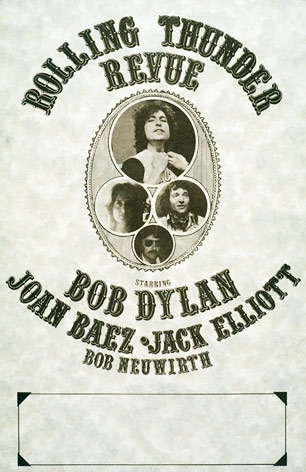
The Rolling Thunder Revue

Standard

121612-sponsored-bob-dylan-16-306-1355690553

This is going to be a bit of a jumble.

The whole Rolling Thunder Revue period has really played a bit of havoc on my one year per week system, not the least because the tour itself ran from October 30 to December 8, 1975, and then again from April 12 to May 25, 1976. In some ways it is two distinct tours supporting Desire, and in some ways it is all of a kind. Basically, I’ve just been a little bit overwhelmed by the immensity of the whole thing, and going away for five days in the middle of it didn’t help.

Here’s what we need to sort out, the remnants of the RTR:

Desire

Hard Rain

Bootleg Series 5: Live 1975

A whole ton of bootlegs

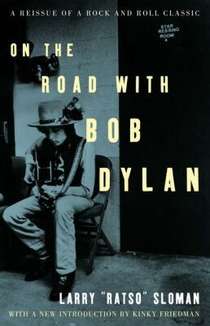
Larry Sloman’s book, On the Road with Bob Dylan

Fortunately, we do not have to address Renaldo and Clara for another two weeks, because it wasn’t released until 1978, but that will bring us right back into this chaos.

Since I’ve already dealt with Desire, I’m going to start with Larry Sloman.

lsloman-210-Bob_dylan

Let me start by saying that other than the autobiographical Chronicles volume 1, this is the best book that I have read so far this year about Dylan (caveat: I have only read one chapter of Sean Wilentz’s book, and I think it is going to be better in the end). Sloman was a music industry hanger-on, friend of Roger McGuinn and Rubin Carter who was fortunately placed to be around Dylan when the tour was just initially coming together. He then covered the tour for Rolling Stone for a few weeks. He wrote this article, and then another that was substantially rewritten by the editors. Dylan’s contempt for Rolling Stone is one of the themes of the book. Eventually Rolling Stone cut him off, but he continues on the tour as basically an employee, supporting the filming of Renaldo and Clara and interviewing people.

The book is a diary for the most part. It’s not much about Dylan – you get very little sense of Dylan from the book – but it is about the chaos of the tour. The RTR employed seventy people, from musicians to technicians, and basically rolled into towns with only a few weeks notice and set up camp and ran shows in venues large and small. The sense of chaos that oozes from every page of Sloman’s book is both intoxicating and invigorating. Characters move in and out. Joan Baez is a somewhat minor character – she teasingly renames Sloman “Ratso”, a nickname from Midnight Cowboy that sticks with him to such a degree that Sloman stops writing the book in the first person at that point, and switches to third person. It’s a very effective moment. Joni Mitchell is more prominent, mostly because of a fight she and Sloman have about gender and songwriting. McGuinn isn’t much there, nor T-Bone Burnett, nor Ronee Blakley. Sara Dylan appears midway through and is an interesting figure, as is Dylan’s mother, Beattie.

The whole thing is written in the Hunter Thompson gonzo style of paranoia, drugs and rock and roll. It’s exhausting just reading about this tour, where everyone got a cold that basically never went away but they also never seem to go to bed. Sloman seems to have had his tape recorder going at all times, so there are great interviews here with the supporting players, but never much with Dylan, with whom he has only occasional contact.

One of the things that Sloman is great about is covering Dylan’s earliest interactions with some of the performers who were influenced by him and who come in the generation after him. He details Dylan’s first meetings with Patti Smith, and her hanging around the rehearsals before the tour began. He writes about Dylan and Lou Reed, and Reed’s disinterest in what they were trying to do. He writes about Bruce Springsteen’s first meeting with Dylan at a show in New York, and Springsteen being essentially dragged out of the backstage area: “He looked so fine at first but left looking just like a ghost”.

The coverage of the filming is probably the most interesting part of the book, and makes it sound completely out of control. Sloman was regularly dispatched to find locations and extras, and then the crew would just never show up. They’d plan to shoot Joni Mitchell performing in the streets of Quebec, and then forget about it. They’d write things as they were shooting and between takes. Sam Shepard appears briefly, hired to bring some order to the script, but I’m not even sure if he stuck around. He’s at a party on page 419, but I don’t know if he had left and then come back or he’d been there all along. It’s possible that even Sloman didn’t know.

Anyway, it’s a great book. It’s probably too long at 460 fairly dense pages, but I was riveted by it because this is the one tour in the history of popular music that I am most fascinated by.

bob-dylan-hard-rain

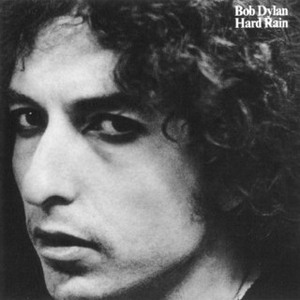
You can’t see that from Hard Rain, the official live album from this tour. Hard Rain was recorded mostly at the May 23, 1976 show at Fort Collins, Colorado (with some stuff taken from the May 16 show). Unfortunately, this was one of the worst shows on the tour. In Sloman’s book, he quotes Robbie Robertson (visiting the tour for the Hurricane Carter benefit show at Madison Square Garden that ended the first half) as saying about touring with Dylan: “It gets better. I don’t think it gets worse, I don’t think you lose it, I think it gets better”. That seems logical, but in the case of the RTR it is clearly not true. The live album came when the show had run out of gas. It’s not for nothing that everything on this album seems to be in slow motion.

Bob Dylan TV Guide

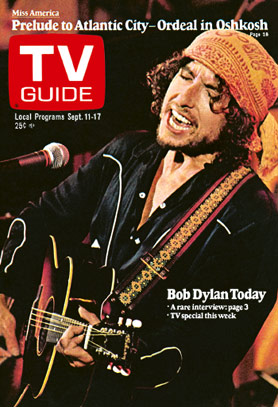
I’ve listened to a lot of bootlegs from this tour, and as late as the New Orleans shows three weeks before the end the shows are really good. By this point Sara was truly gone, and the love songs were replaced by things like “Idiot Wind”. Dylan was heading into his breakdown period (in 1977 there is virtually nothing at all to write about – he basically hides from the world again). The tour begins to slowly spiral out of control, losing its initial enthusiasm as it heads across the south and into Texas. If you listen to a lot of shows, you can definitely hear it petering out. Hard Rain was also a television special, but I was unable to get a copy of that. Someone put it on YouTube a few years ago, but Columbia has had it expunged. I don’t really want to see it, other than for the principle of the thing. The other main problem with Hard Rain was that it was a single album. Unlike Before the Flood, which included songs by The Band and gave some sense of how the actual shows were, Hard Rain does none of that. Good-bye Joan, Roger, and everyone else. RTR was most assuredly not just a Dylan show, and Hard Rain does nothing to try to capture that.

Live_1975_-_Front

Much better is Bootleg Series 5, the live album that they should have done in the 1970s. Most of the material is taken from the shows in Boston, at Harvard, and in Montreal. Those are some truly great shows. Montreal might be my absolute favourite, and they could have done a great album just by releasing the whole show. Again, it doesn’t give the sense of a complete RTR show, but it does give much more vital performances than Hard Rain did.

Though I’ve now reached the end of 1976, I am certain that this is the period that I will come back to again. I almost feel like next year I’d like to write a blog about this tour and try to listen to every show. Sadly, they don’t all exist. The bootleg of the tour’s stop at the Clinton Correctional Institute, where they played for Carter live, includes only three songs (“Blowin’ in the Wind”, “Hurricane”, and “Knockin’ on Heaven’s Door”) but Sloman argues that Dylan’s “Hattie Carroll” was the best version of it that he ever did – but it seems to be lost to history, alas. Also, the convicts booing Joni Mitchell off the stage. Also, Roberta Flack’s performance.

I feel like I have spent two weeks thinking about this tour and still have many more questions than I have answers here. I’ve only scratched the surface, I’m sure.  I still don’t really know for sure why he was painting his face white…

Here he is in Clearwater, FL from the second part of the tour:

Desire

Standard

Bob_Dylan-Desire-Frontal

Here’s a passage that basically sums up Desire for me. This is from Larry Sloman’s 1978 book, On the Road With Bob Dylan, about his exploits as the Rolling Stone reporter tagging along on the 1975 portion of the Rolling Thunder Revue. At this point in the Hunter Thompson-esque odyssey he is holed up in Maine in a hotel, convinced that the Dylan entourage has sabotaged his rental car to keep him from getting to Quebec City. Strung out on amphetamines he phones Mike Bloomfield, who was Dylan’s guitarist when he first went electric. Bloomfield, and he asks him what he thinks of Dylan’s later albums. Bloomfield argues that the only two well-produced Dylan albums are Blonde on Blonde and Nashville Skyline:

“As far as I can see an album has never come out by Bob that was musically equal to the content of the songs or they lyrics. And strangely enough, except for rare occasions, I would rather hear Bob sing his songs than cover versions, but I’d rather hear Bob singing his material better produced”

Elsewhere in the book, Sloman reports that he suggested to Dylan that he simply re-record the entirety of Desire with the band that was on tour, because they were so much better at the songs now than they had been when they recorded the album. That was a great idea by Sloman that, of course, had no chance of happening.

Here’s the thing: Desire is the Bob Dylan album with the best overall collection of songs. Song for song, ton for ton, Desire can out punch any other Dylan album. But here’s the other thing: Desire is not Bob Dylan’s best album, because almost every single song on the album sounds better elsewhere (“Joey” might be an exception here).

One of the interesting things about Biograph is that it was assembled by a Desire fan. They included three songs from those sessions – “Abandoned Love”, “Isis” and “Romance in Durango” – but, importantly, nothing actually from the album itself. “Abandoned Love” was, I noted, inexplicably left off Desire, despite the fact that it would have been the album’s best song. Biograph uses live versions of the other two songs, and they are great. I actually have trouble listening to “Isis” on the album because I always mentally expect to hear Dylan say “This is for Leonard…. If he’s still here”, which is how he introduces it on the live version on Biograph, which is the version I always listen to. (from the Montreal show in 1975 – the Leonard is, of course, Leonard Cohen. That show is incredible, by the way).

So, Desire is an album full of songs that I like better when they’re not on Desire. But what a collection of songs. “Hurricane” and “Mozambique” I’ve already addressed, and both are great. “Isis”, the second track, is a top ten Dylan song for me, probably even top five just for the Montreal version. It’s perhaps my second favourite Dylan story song, and, live, this verse always kills me:

She said, “Where ya been?” I said, “No place special”

She said, “You look different.” I said, “Well, I guess”

She said, “You been gone.” I said, “That’s only natural”

She said, “You gonna stay?” I said, “If you want me to, yeah”

“One More Cup of Coffee” and “Oh Sister”, the duets with Emmylou Harris, are really solid mid-1970s Dylan dirges. But the best of these is “Sara”, Dylan’s most personal song since the execrable “Ballad in Plain D”. “Sara” is a beautifully constructed song, with the verses looking back to earlier moments in their now doomed relationship. Sara was apparently there live when Dylan recorded it, but it may have been too little too late. The line in which he references “Sad-Eyed Lady of the Lowlands” is sort of a minor classic, although his rhyming “help” and “kelp” always strikes me as a clanger.

There is nothing that I don’t like on this album, which might be a first for me. It was #1 in the US for five weeks, and was one of Dylan’t best-selling albums. I think, for me, this is really the peak – not the album itself, but the tour that supported it and many of the versions that can be found. An unbelievable collection of songs, but not the best album.

“Abandoned Love”

Standard

Bob-Dylan-Sara-Dylan

There is no doubt in my mind that Dylan’s first great sin of omission came when he left “Abandoned Love” off of Desire. For me, this song is right up near the top of the Dylan pantheon as far as heartbreak songs go, and actually among my favourite Dylan songs of all time. The idea that it itself was basically abandoned makes no sense to me.

Dylan debuted “Abandoned Love” at a party at The Other End, a club in Greenwich Village in July 1975. This was around the time that he began collaborating with Jacques Levy, writing songs for the album that would become Desire, and putting together the Rolling Thunder Revue. That club version, available on a very low quality live recording, is apparently the only time Dylan ever played the song live. He recorded it on 31 July 1975 in just two takes, and it is the first of those that can be found on Biograph (and on the bonus discs of The Complete Album Collection).

I don’t think I can stress it enough – I absolutely love this song. I listened to it about a dozen times today and right now, at this very second, I would probably call it my favourite Dylan song. I know, I know, I’ll calm down, but it is really that great. By the end of the year this will be back in perspective, but right now, today, I can’t get enough of this thing.

The song was bounced from Desire because of “Joey”, essentially. I think “Joey” is fine, don’t get me wrong, but it’s no “Abandoned Love”. Not even close. In fact, had it been on Desire, “Abandoned Love” would have been the best song on what is one of Dylan’s best albums. But he left it off!

This is clearly a divorce song, and one might suspect that he felt it was too personal for the album, or too revealing. That seems unlikely. “Sara” is on this album, after all. Maybe just one too many break up songs then? Possible, but if so, he chose to leave off the wrong one.

From what I’ve read about the years to come, this won’t be the last time that Dylan leaves the best song – or best version of a song – off of one of his albums. There is an entire genre of bootlegs that attempts to produce “better” versions of some of his later less-respected albums from studio outtakes. I’ll be curious to check those out, but in the meantime this was a very real misstep and someone should have told him so.

Fortunately the people who put together Biograph corrected the error. One of the best things about YouTube is that it has the only live version of this song ever played by Dylan:

“Mozambique”

Standard

220px-Mozambique_single_cover

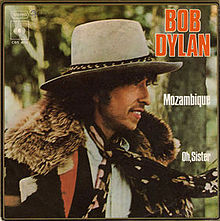
Here is what Wikipedia says about “Mozambique”, the second single from Desire:

“Mozambique” started as a game, to see how many rhymes for “-ique” Dylan and Levy could find.”

I know that one should never doubt the truth as spoken by Wikipedia (especially when that assertion has not corroborating link), but if we take this to be true, we have to believe that Bob Dylan and Jacques Levy, with whom he co-wrote a number of the songs on Desire, are completely useless. “Mozambique” has exactly three rhymes with “ique” in it: cheek, speak, and peak (there are only three verses, plus the bridge). Off the top of my head:

bleak

freak

geek

leak

seek

sheikh (in some pronunciations)

sneak

streak

week or weak

Antique Greek physique with a unique mystique

Seriously wikipedia? Are we supposed to believe your meek squeaks?

I do have to say, “Mozambique” is a really good song, but is a very odd choice of singles from this album. Most of the other songs might get ruled out just for length (“Isis” and “Black Diamond Bay” are both seven minutes, “Romance in Durango” and “Sara” are both over five, and “Joey” is an epic eleven). You don’t follow an epic 8:33 single (“Hurricane”) that did only so-so, with another epic. Desire only has two short songs, this and “One More Cup of Coffee”, which is too slow and dirge-like to be an effective single. So it was sort of a default, I suppose (it also makes the exclusion of the fantastic “Abandoned Love” (released on Biograph in 1985) all the more inexplicable, as that might have been the best choice of a single on the album, had it actually been on the album).

If Dylan and Columbia were backed into a corner with their choice, it doesn’t make it a bad choice. “Mozambique” is one of the very few songs on Desire that I think is at its best on the album version. Almost every other song sounds better in the live versions on Hard Rain or elsewhere on the bootlegs, but “Mozambique” was pretty much nailed in the studio. It is a slightly odd, slightly goofy song. Dylan stopped performing it live after 1976, so it doesn’t really last in his canon of work, but it is thoroughly enjoyable. On this one he doesn’t shriek so there’s no need to tweak the sleek chic single.

Here’s a live version from 1976. Not as good as the album version, but still worth watching if just for the headgear. Sheik chic!:

“Hurricane”

Standard

Bob+Dylan+-+Hurricane+-+7-+RECORD-83165

Released as a single in 1975, but serving as the opening track of Dylan’s 1976 studio album, Desire, “Hurricane” is one of the best story songs Dylan ever recorded.

Dylan became interested in the story of Rubin “Hurricane” Carter, the boxer who imprisoned for murders that he did not commit, after reading the man’s autobiography. Carter had sent him a copy after being told that he was a politically aware celebrity at a time that the fighter needed powerful friends, and when Dylan read it he made a note to visit Carter in prison when he was next on the east coast. After meeting Carter in a New Jersey prison, he was determined to join a growing group of celebrities who had dedicated themselves to winning a new trial for Carter. The result was this anthemic song, co-written with Jacques Levy.

bob-dylan-black-and-white

Musically, the song is a departure for Dylan. Larry Sloman, in his marvellous book about the Rolling Thunder Revue, has extensive chapters about Dylan’s meeting with Carter (Sloman interviewed Carter about it, and the two spoke regularly) and also about the re-recording session for the single. Dylan had cut a version of the song that was to be released, but, unfortunately, it had errors of fact in it that may have been deemed libellous, so it had to be rewritten and re-cut. Sloman’s description of the long night’s recording session gives what seems to be a very good sense of the chaotic way that Dylan was working at this time – literally picking up a fiddle player off the street while driving around New York, for example.

It was this song, Sloman argues, that was the inspiration for the work that went into Desire with Levy, and also to the Rolling Thunder Revue, the insane tour that sprung from it (and which included the Hurricane Carter benefit show).

One of the problems that I have with some of Dylan’s longer story songs, is the feeling that once I know the story, I generally lose interest. His more ambiguous material – with its aphorisms – generally holds more interest for me. This isn’t the case for me with “Hurricane”, which has some of Dylan’s most evocative and powerful lyrics. This is one of the best verses he has ever written:

All of Rubin’s cards were marked in advance

The trial was a pig-circus, he never had a chance

The judge made Rubin’s witnesses drunkards from the slums

To the white folks who watched he was a revolutionary bum

And to the black folks he was just a crazy nigger

No one doubted that he pulled the trigger

And though they could not produce the gun

The D.A. said he was the one who did the deed

And the all-white jury agreed

Sloman reports an interesting perspective from 1975 where he suggested that despite the “disco” flavour of the song, he felt that black radio would avoid the song for two reasons. First, Dylan was seen by some as an arriviste to the Carter cause, attaching himself only after others had already done so. Second, George Jackson’s mother had apparently complained that she didn’t receive royalties from Dylan from his song about the death of her son. Sloman reports that Dylan found the latter a bizarre claim, but there you have it. Ultimately the song did only ok on the pop charts (peaking at #33, ironically the exact same as “George Jackson”)

It’s a great opener to an even better album. I listened to Desire twice today on the plane (and Hard Rain twice, and two full live shows from 1976) and I may want to retract last week’s contention that Blood on the Tracks is his best album.

As for Carter, he won a new trial in 1976, but was convicted for a second time. A federal court dismissed the case against him in 1985, at which time he was released. A terribly sad story.

Basement Tapes (again)

Standard

basementTapes

Sorry that this is late. I’ve been on the road for the past four days watching The Masters, and haven’t had a second to listen to Bob Dylan at all. I’m back now.

We’ve been through The Basement Tapes already pretty thoroughly, so a large part of me suggests that you just go back and re-read what I previously wrote. Columbia released The Basement Tapes officially in 1975, so this post is belated. It wasn’t so much a Dylan album as a Robbie Robertson album. He picked the tracks, and The Band laid down overdubs to clean things up, but Dylan wasn’t involved with any of that. Of course, Robertson also included a number of demos by The Band on the album as well, making it more collaborative than it was in actuality. The image that the official release paints is of Dylan hanging out with The Band, and with them writing some new songs and Dylan writing some new songs. I don’t think that’s how it actually was.

A Tree With Roots is significantly better than The Basement Tapes, not just because it is so much more complete (a lot of the work on it just isn’t very good), but because the official album feels sort of ersatz. The Band material feels intrusive here in a way that it doesn’t on an album like Before the Flood, and I actually found myself quickly skipping these songs when they would come on. Also, and I don’t know much about this, I think that there have been allegations that The Band material has actually been muddied in the studio in order to make it sound less professional than it really was, to fit the aesthetic of the album. As I said, ersatz.

I bought this album as a teenager and was really disappointed by it, and I wonder if I would have been as let down by it if I had bought it in 1975. Dylan is said to have been surprised it sold at all, because he figured most of the people that would have wanted it already owned the bootlegs. That’s the situation that I found myself in as well. This one won’t get much play from me in the future, since if I decide to hear this material it will be from A Tree With Roots. In fact, there is nothing here that I think is better than the versions on the bootleg album, so I think it is the first disposable Dylan album.

Blood on the Tracks

Standard

blood-on-the-tracks-album-cover

I have no idea what the first Bob Dylan song I ever heard was, or what my reaction to it might have been. I’m certain it would have been something on the radio.

I do know what the first Dylan album that I ever listened to was: Blood on the Tracks. I can probably even guess that it would have been around 1983.

My parents were not big music collectors. I can sort of count on one hand the times I remember my father bringing home music (specifically, I remember one day that he brought home albums by Charlie Pride and Freddie Fender and Loretta Lynn when I was a kid). For some reason up at our cottage in central Ontario we had a bunch of cassette tapes – like maybe twenty of them. They were on a side table that had a little shelf, and we had a little radio/tape-player combination that got rarely used (we could only get one radio station at the cottage and it was the dreadful CHAY-FM, so it wasn’t on often).

Sometime around the time I was thirteen or fourteen I must have decided to play those tapes. Where did they come from? I believe, though I will have to check, but I believe that they came from the Columbia Record of the month deal. You know, buy ten for a penny, and then three more at full price. I guess this because I do think that they were all Columbia artists. This seems like something my father might have done before I was old enough to recall it.

I remember four of those tapes: Kenny Rogers’s Greatest Hits. Johnny Cash Live at San Quentin. Blood, Sweat and Tears something or other. Bob Dylan Blood on the Tracks.

If I’m being honest, the albums we liked best were Rogers and Cash. Further, the songs we liked were all the terrible ones (“The Gambler”, “Coward of the County”, “A Boy Named Sue”). We were kids and we had bad taste, but we would often play these when it was raining and there was nothing else to do but play cards and listen to “Lucille”.

I know that the Dylan didn’t immediately take. I don’t remember listening to it that much. More than Blood, Sweat and Tears, but less than Cash (I can probably still sing “A Boy Named Sue” from memory). It was likely the next year that the Dylan started sinking in. It was probably the third summer that I realized how good the whole thing was and started buying Dylan albums myself (first one: Empire Burlesque. On cassette. Not an auspicious debut).

Why did my parents own a copy of Blood on the Tracks? No idea. I know that my father has indicated to me that he never liked Dylan (he was in his 20s when “Like a Rolling Stone” hit, always more an Elvis fan than a fan of any rock stuff from the 1960s). The album was a #1 hit, so it could have just been its ubiquity when they were ordering – a tenth choice for a penny when nothing else looked that interesting. That would be my best guess.

That’s the secret origin of the Dylan blog. Somehow, mysteriously, I came across Dylan’s best album at a time when I had access to about five albums and a lot of spare time.

And, yes, I do think it’s his best album, even despite “Lily, Rosemary and the Jack of Hearts”.

“Buckets of Rain”

Standard

And then we reached the end.

“Buckets of Rain” is one of those terrific, minor Dylan songs that everybody loves more than Dylan loves it. Covered by everyone from Bette Midler to Beth Orton, this is a song that Dylan has only played once, in 1990.

It is a trifle, a palate cleanser, a “we’re moving on” song. It’s easy to imagine that Dylan tossed this off without giving it much thought – it almost could be improvised. It’s guitar and bass and not a lot to it, and it is a near-perfect conclusion to a powerful album filled with songs of suffering.

That’s it. There ain’t no more. Final thoughts on Blood on the Tracks tomorrow. In the meantime, here’s Neko Case. Take us home, Neko!