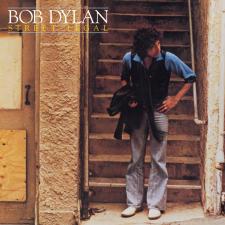
Street Legal

Standard

3992189_198

My wife, who has four sisters (and two brothers) tells me that she first heard Street Legal in 1978 when her sister, Louise, brought it home from a record shop. Apparently Louise was ridiculed for this decision by older sister Kate, who pronounced Dylan “lame” and “over”.  I’m not sure if this family rift ever healed – with large families it’s tough to tell.

The fact is that Kate was voicing the critical opinion of the day. Street Legal was greeted with a resounding critical thud. I just read Greil Marcus’s Rolling Stone review this morning and it is, to put it politely, uncharitable. Given the changes in popular music in 1978 – not just punk, of course, but also disco – Dylan with gospel-influence back-up singers and a sax player was another step too far for a lot of his fans. After three straight number one albums, this was the first full-length Dylan album to fail to make the top ten since 1964. He’ll basically have one more hit album (Slow Train Coming) and then nothing close to one for almost thirty years. This is the beginning of the dark period for Dylan.

According to Marcus, actually, the dark period begins with Desire, which he thinks has only a single good song, and that this has none. In fact, he implies that this is worse than Self Portrait. I often find myself disagreeing with Marcus, and in this case my disagreement is strong. I actually think that Street Legal is a good album – not a great album like Blood on the Tracks and Desire, but still quite good. Most of the songs, as songs, are really well done (except, bizarrely the first two singles – “Is Your Love in Vain?” and “Baby Stop Crying”). Many of the songs return to Dylan to the heights of lyrical complexity that he attained in the mid-1960s (Marcus dismisses all of this as faux sophistication, as I say, uncharitable). I’ve already argued that “Changing of the Guards” is a great song, but I will give him credit for “New Pony”, “No Time to Think” (never played live!), “Señor” (one of the highlights of the 1978 tour shows), “True Love Tends to Forget”, and “Where Are You Tonight?”. I actually think these are all well-written songs, and “We Better Talk This Over” is both well-written and well-played here.

The big problem with Street Legal is that, like Desire, it is horribly produced. By all accounts the fault for this one lay with Dylan, who had written most of the material long before the album was recorded, and he just sort of rushed through it. The album was recorded at his rehearsal space, with improper sound baffling that basically eradicated the bass and made the sessions a nightmare for the recording staff. Dylan didn’t care. It’s pretty clear by now that Dylan puts pretty little emphasis on his albums as albums – they are just places that he puts his songs, and his songs are things that he works on in live performance. This seems to upset people like Greil Marcus (or it did at the time), but it doesn’t bother me one bit. (To be fair, I should also note that the version I have, from the Complete Album Collection, is remastered and that apparently the version that Marcus was reviewing was notably worse).

I listened to a lot of live Dylan this week – like thirty hours worth – and a lot of these songs sound great live, or sounded great since he pretty much stopped playing almost all of them at the end of this tour. None of them sound as good on Street Legal as they do live, but Marcus’s inability to hear them as songs is his failing, not Dylan’s. There’s a lot of remarkable material here. Yes, some of it is buried under awful production and annoying sax fills, but that doesn’t take away from the fact that the songs themselves are actually really good.

Nonetheless, 1978 was the beginning of the “dump on Dylan” period. Renaldo and Clara was a bomb, Street Legal was lame, and the tour, though an enormous success, was also critically derided. He had become terminally uncool. Louise never had a chance, but it’s not actually a bad album.

Seriously, if you think that this is a bad Bob Dylan song, you’ve probably come to the wrong blog:

Dylan Scholarship

Standard

cicadas_Dylan_Honorary_400

In other contexts it’s called “scholarship.”” My friend Rusty posted that yesterday in relation to my thoughts on SearchingForAGem.com, the website that breaks down the intricate minutia of Dylan’s recordings in various contexts. Rusty was drawing a distinction between data collection and analysis, and how that analysis necessarily stems from data collection. This segued nicely with a discussion I was having yesterday about a couple of projects that I am working on.

In my day job, as professor of English at the University of Calgary, I write not about popular music but about comic books. My next book is now complete and will be out from Rutgers University Press in about a year (academic publishing schedules being what they are). A post-doctoral fellow that I am supervising and I were discussing the various ways that comics scholarship circulates among comics scholars, and the tendency of some comics scholars to ignore most of the work done in the field, or to read very selectively based on a narrow set of interests so that, for example, scholars interested in superhero comics might not read a book about European comics or manga, and vice versa. This is, of course, not a problem specific to comics. Shakespearians may not read much about Joyce, and Joyceans may not read much about Austen. There’s a lot of scholarship out there, and no one can keep up with it all.

Since my next book is about Archie Comics, we were wondering if it will be read by people who haven’t read Archie Comics. It is certainly designed to be – indeed, that is probably the primary audience. My post-doc asked what I hoped to accomplish with the book, and I noted that it has an implicit critique of the standard methods of doing scholarly work on comics – but that the critique is subtle about that in that it demonstrates its argument rather than proclaiming a new way of doing things. I’m not sure that all of the nuances will be picked up, but we’ll see. When he asked me what that implicit critique was, I suggested that it is (at least in part) an argument for data collection. My book examines eight years of Archie Comics, but to do that I read almost one thousand issues of Archie as the way to begin, because, to my mind, scholarship begins from the broadest possible base of understanding. That is the foundation. I am always struck when I read an article about a comic (or anything, really) and it appears to me that the author is unaware of related materials. I recently spoke to a student who is writing on a well-known mid-century American novel and he explained his approach. I mused that there was a great example of what he was talking about in another novel by the same writer, about five years after the novel he was considered. The student admitted “I haven’t read that”. It baffled me that a PhD student might not have read the five or six significant works by the subjects of one of his chapters. It baffled me that he wouldn’t have read everything, in fact.

To write a book about Archie in the 1960s I read all of the stories – not just the good ones, and not just the ones I thought I would write about, and not just the 1960s material but well into the 1970s and back into the 1940s. How could one do otherwise? This blog is not a scholarly project (yet), but it occurs to me that the same principle has to apply. To study Dylan for a year means listening to things you might not want to listen to (ie. the next month). You don’t pick and choose when you seek to understand, you dive right in and try to get a sense of the whole terrain before digging down. I’ve mentioned that I might want to write something formal about “Tangled Up in Blue”. I just looked at some existing scholarship on that song – and a lot of it deals with the lyrical differences between the version on Blood on the Tracks and Real Live. To me, that would just be scratching the surface. I’m not saying that it is necessary to hear all 1,377 versions of the song that Dylan has played live (imagine that!), but a sample size of two seems somewhat ridiculous to me.

According to the MLA database, there are 258 peer-refereed articles written about Dylan (that number will be low since the MLA database doesn’t cover many non-MLA fields). If I ever do decide to do something scholarly with Dylan, I’ll spend all of 2015 blogging those – one article per day for the entire year. After that, and only after that, I might be able to write something.

Masterpieces

Standard

Bob_Dylan_-_Masterpieces

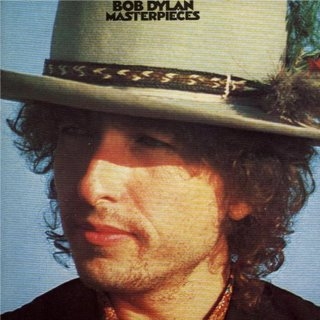
I was going to skip Masterpieces. This is the triple-LP greatest hits collection that Columbia issued in Australia, New Zealand, and Japan in March 1978 in anticipation of his tour there. There’s not much for me to say because I don’t actually own it (I did see a copy in January at a used record store, but I don’t own a turntable and it seemed odd to pay collector’s prices for an album that I can’t play and which I have all the music anyway, so I passed).

What I can say is that it’s a terrific Greatest Hits package in terms of song selection. Thirty-nine tracks, and almost every one a winner. Probably a much better package than the two American Greatest Hits collections, which also amount to three LPs.

Anyway, I was going to pass, but in googling around I was reminded of this site. These people (it can’t be one person, can it?) trace the different versions of everything Dylan has ever done. I mean, ever done. This site is incredible. They have scans and photos of the labels from the various releases. They have pictures of the cassette tapes! This is a level of obsession that I can admire, but that this project hasn’t even come close to touching. This is the work of a lifetime, not a year. This is close, attentive listening to bootlegs and studio outtakes to identify minor technical differences.

MasterpiecesAusCasSide2

Check this: About the version of “Mixed Up Confusion” included here:

R-0145-3 Mixed Up Confusion, 1962 – out-take from The Freewheelin’ Bob Dylanrecorded at Columbia Studios, New York, 1 Nov 1962 (take 10), and overdubbed with different backing, probably on 8 Dec 1964.  It is therefore not Bob’s first single R-0007 (see 1962) as expected, but the alternate take without the first harmonica solo from the Japanese promo LP Mr. D’s Collection # 1 (see 1974) and promo EP, Mr. D’s Collection  #2 (see 1976). This is Side 3, track 1.  As on those other releases, it is a mono mix of the overdub take.

I can’t compete with this. Hell, I can only barely comprehend it!

They have some great trivia here (“Dr. George Christos informs me Masterpieces was once given away by an Australian beer company with a purchase of 24 cans of beer!”)

It’s all a bit too much for me, I’m afraid.

Renaldo and Clara

Standard

Poster_of_the_movie_Renaldo_and_Clara

I can’t in all good conscience tell you that Renaldo and Clara is a good film, but I have to be honest with you: there was more stuff in the movie that I liked than I disliked, and even at four hours, I never felt it was too long. Indeed, parts of it I wish had been much, much longer.

I’m not even sure where to begin with this thing. I guess the idea that Dylan thought that this was a good idea to make a film like this is probably the logical starting point. In his interview with Rolling Stone he makes it pretty clear that the main reason to do the Rolling Thunder Revue was to finance this movie – and certainly the second leg, in 1976, may have been exclusively about that. After receiving a lot of Hollywood offers, he opted to go independent, self-finance the film, produced, star and direct in it so that it would be his vision. He hoped to change cinema the way that he had changed popular music more than a decade earlier. And, well, that certainly did not happen. Check this exchange in Playboy:

PLAYBOY: How much of your money are you risking?

DYLAN: I’d rather not say. It is quite a bit, but I didn’t go into the bank. The budget was like $600,000, but it went over that.

Add into this the fact that he built an expensive house in Malibu and that he lost half his income from the previous decade to his ex-wife and you start to see why he started touring incessantly in 1978….

renaldo-and-clara-3

Since we’ve started there, let’s start with some words from Dylan himself:

PLAYBOY: Do you really feel it’s an accessible movie?

DYLAN: Oh, perfectly. Very open movie.

PLAYBOY: Even though Mr. Bob Dylan and Mrs. Bob Dylan are played by different people….

DYLAN: Oh, yeah.

PLAYBOY: And you don’t know for sure which one he is?

DYLAN: Sure. We could make a movie and you could be Bob Dylan. It wouldn’t matter.

PLAYBOY: But if there are two Bob Dylans in the film and Renaldo is always changing….

DYLAN: Well, it could be worse. It could be three or four. Basically, it’s a simple movie.

So, okay. Dylan lies in interviews. Maybe he is lying here when he says that he believes this is an accessible film. I mean, there is really no way on earth that he could have been alive on planet Earth in 1978 and thought that this was an “accessible” movie. It is four hours long. It is composed in kind of equal parts of live concert footage, tour documentary, and horribly acted scenes in which musicians (plus, inexplicably, Harry Dean Stanton) act out improvisational scenes that look like they come straight out of Boogie Nights. There is no definition of “accessible” that could possibly apply to this. But, here’s the key, maybe that’s not Bob’s fault, it’s yours!

(from Rolling Stone):

Renaldo and Clara has certain similarities to the recent films of Jacques Rivette. Do you know his work?

I don’t. But I wish they’d do it in this country. I’d feel a lot safer. I mean I wouldn’t get so much resistance and hostility. I can’t believe that people think that four hours is too long for a film. As if people had so much to do. You can see an hour movie that seems like 10 hours. I think the vision is strong enough to cut through all of that. But we may be kicked right out of Hollywood after this film is released and have to go to Bolivia. In India, they show 12-hour movies. Americans are spoiled, they expect art to be like wallpaper with no effort, just to be there.

Here’s the weird part! I agree, it actually doesn’t seem too long at four hours – in parts. As I say, there are parts of this that I would have watched for days.

rjbneve

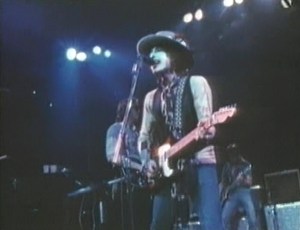
The concert footage is easily the most watchable part. I listened to the Montreal show a lot a couple of weeks ago, but a good percentage of the footage here is from that show (other parts are from Boston and Providence). Seeing it live makes it so much more vivid. I was enraptured by the whole thing – such a magnetic, bizarre performance, with the white face make-up and the powerful vocals. Most of the concert footage is shot super-tight on Dylan – you only occasionally get to see the rest of the band. It’s almost as if you are sitting at the feet of the master here. I would have watched endless, endless hours of live Dylan footage from this tour and been happy. (Long circulating rumours are that the next Bootleg Series set will be to Blood on the Tracks what Another Self Portrait was to Self Portrait, and that they will cobble together a lot of this concert footage. We’ll see. I hope they do that, but we’ll see).

The documentary footage I could probably even watch. One of the very first scenes in the film is a backstage scene with Larry Sloman demanding a per diem and more access, just like he says that he did in his book. I had a weird sense of deja vu watching this scene, because Sloman is so good about reporting it. There are all kinds of other weird documentary moments – at the native reserve, at Kerouac’s grave – and all of that could have made a good film like Dont Look Back or Eat the Document. But Dylan doesn’t seem to think so.
renaldo-and-clara-1

Here’s Dylan again from Rolling Stone:

“The Death Mother is represented in the film, but I don’t know what I should say or can say or shouldn’t say about who is who in the movie. I mean who is the old woman everyone calls Mamma — the woman who sings, plays guitar and reads palms? She reads Allen’s palm, saying: “You’ve been married twice.” And me, later on I’m looking at the gravestone marked HUSBAND; Ginsberg asks: “Is that going to happen to you?” And I say: “I want an unmarked grave.” But of course I’m saying this as Renaldo.”

Seriously – What. The. Fuck? For Dylan to claim that he is “Renaldo” in that scene makes no real sense, partly because Renaldo is a total non-character. As an alter-ego, Renaldo is a total non-starter. And this is where the film goes horribly awry. Dylan seems to honestly think that he is making a movie about “The Death Mother”, but there is no sense that any thought at all has gone into any of this. Indeed, the Sloman book pretty much indicates that none did. When you read that book you get a strong sense of the way that Dylan worked, which was, essentially, show up somewhere and tell people what role they were suddenly playing and then begin improvising. Sam Shepard was around to help put the script together (in one of the concert scenes there is a great moment where he is glowering at the stage…), but that doesn’t seem to have actually gone anywhere (I just learned the other day that Shepard published a book about his experience – I’ve ordered it, but it hasn’t arrived yet).

Here’s Dylan explaining his vision of the Renaldo parts:

“Yeah, way back then I was thinking of this film. I’ve had this picture in mind for a long time — years and years. Too many years . . . Renaldo is oppressed. He’s oppressed because he’s born. We don’t really know who Renaldo is. We just know what he isn’t. He isn’t the Masked Tortilla. Renaldo is the one with the hat, but he’s not wearing a hat. I’ll tell you what this movie is: It’s like life exactly, but not an imitation of it. It transcends life, and it’s not like life.”

Again, seriously: What. The. FUCK?!?! “He isn’t the Masked Tortilla”. Unh huh. Got it. He’s not Bob Dylan, because Ronnie Hawkins is playing Bob Dylan. He’s the one with the hat that isn’t wearing a hat, but Renaldo is mostly wearing hats in the film. Seriously, you can’t make this stuff up.

Here’s the biggest Bob Dylan lie of the whole thing:

“It has nothing to do with the breakup of my marriage. My marriage is over. I’m divorced. This film is a film.”

The best “scripted” scene in the whole film, by a country mile, is the scene with Dylan, his wife Sara, and Joan Baez. It is positively charged with dramatic tension. When each asks him “Do you love her?” it is an incredible scene. But not about the breakup of his marriage. Dylan, please. When Baez, as “The Woman in White”, arrives for that climactic scene Dylan cuts to himself – or Renaldo? – performing “Sara” at the Montreal Forum. Not about his marriage, nope, not one bit. The whole thing is really incredible, particularly for the way that they layer in Dylan and Baez singing “Water is Wide” in the background, an incredibly poignant:

The water is wide,
And I can’t cross over,
And neither have I wings to fly.
Build me a boat
That can carry two
And both shall row, my love and I.

Basically everything with Baez in this film is great. When she says “What would have happened if we’d got married back then?” it is one of the most amazing things I have ever seen. I’ve already noted that the Dylan/Baez relationship is an incredibly fascinating one, and Baez really lets it all hang out here. Maybe all this ridiculous improv is worthwhile just for its ability to generate those kinds of moments.

renaldo-and-clara-1977-001-talking-in-room_1000x750

Here’s what I loved about Renaldo and Clara:

Dylan’t long fingernails as he plays guitar in the motorcycle garage

Gordon Lightfoot singing “Ballad in Plain D” as Dylan walks the streets

The Montreal performances. If this had just been a concert film, it might have been the greatest of all time.

The roadies setting up the stage. Why is this here? What can it possibly have to do with the rest of the film? Why does it go on so long?

Dylan driving his RV. Awesome.

Joan Baez with “Mamma”.

The chanting at the sea – the most 1970s thing ever.

Contemplating David Cross playing Allen Ginsberg in a biopic.

When it suddenly becomes a documentary about Rubin Carter and an exploration of black rage about the justice system in New Jersey – very raw.

Harry Dean Stanton!

But as a film – it makes no sense at all. There are parts that are interminable and seemingly pointless (the cabaret!). This isn’t a “so bad, it’s good” film. It’s a “so good, despite the fact that it has about two hours of awful in it because the other two hours are awesome”. If you get what I mean.

I’ll watch it again, of that I can be certain.

http://vimeo.com/84513008
“Changing of the Guards”

Standard

Changing_of_the_Guards_cover

“Sixteen years”. Those are the emphatic words that open “Changing of the Guards”, the third and final single from Street Legal. Released in 1978, it was exactly sixteen years since his debut album, and, for me, sixteen weeks into this one-year-one-week trek through Dylan’s life.

I have to say it: I love this song. I mean, I really adore it. Seriously, today I would put it among the top ten songs that he’s ever written. It’s the lead song on an album that most people don’t like. It has all the elements that people deride – the back-up singers, the sax between every verse – and that might be a problem with the way that the song was recorded. But as a song, I think it’s one of the best things that he’s ever done. It’s a full on and complete return to the lyrical complexity that marked his best mid-1960s material. The song, to me, is an absolute triumph.

It’s almost impossible not to read this one in autobiographical terms. Apart from the opening declaration, there is, for example, this verse:

Fortune calls

I stepped forth from the shadows, to the marketplace

Merchants and thieves, hungry for power, my last deal gone down

She’s smelling sweet like the meadows where she was born

On midsummer’s eve, near the tower

The whole thing plays out as a reminiscence on his career to date, and also on his relationship to his now ex-wife, Sara. The lyrics are vague, mystical, and quasi-religious, filled with mythical elements (“She was torn between Jupiter and Apollo”). Lyrically, it is a superior piece of work.

What really puts this one over for me are the live performances of it. This is the third straight non-charting single that Dylan would only ever play on his epic 1978 world tour, but he played it incredibly well. It was frequently in the encore, and it was the rousing anthem that was used to send the crowd home happy. Dylan punches those short first lines (“Sixteen years”, “Fortune calls”, and my personal favourite, “They shave her head” (such a bizarre way to begin a verse in any song)) and often creates beautiful segues out of the sax part. I’ve been listening to a lot of the 1978 tour this week already, and this has quickly become the major discovery of the year for me.

The version that is found on Street Legal is far from the ideal way to listen to this song. Here’s Dylan performing it in Nashville (the sound starts after ten seconds or so):

Here’s another way to do it – the inimitable Patti Smith:

“Baby, Stop Crying”

Standard

url

“Baby Stop Crying”, the second single from Street Legal, was also the second mis-step. This is one of only two songs on the album that weren’t written well in advance of the four days of recording that put the whole thing together. It has a bit of a feeling of a last minute fill-in.

The central aspect of this song is the thing that most people seem to hate about Street Legal: the bluesy back-up singers. It was clear from Desire and the Rolling Thunder Revue that Dylan was desperately looking for a band that would give him the Phil Spector “wall of sound” vibe, and he put it together for his 1978 world tour. It was with this band that he recorded this album, replete with tenor sax and a power trio of back-up singers (one of whom, Carolyn Dennis, he would marry 8 years later).

It seems like that the vast majority of this song is its chorus, with its endlessly repeated phrase, “stop crying”. It just sort of goes on and on and on in this one. The lyrics to the verses are terribly unmemorable. It is testament to their forgeability that I’ve heard this songs dozens of times, and I still had to read the lyrics to remember that it includes the threatening line: “Go get me my pistol, babe / Honey, I can’t tell right from wrong”.

The whole thing is very slight. The second verse amounts to almost nothing:

Go down to the river, babe

Honey, I will meet you there

Go down to the river, babe

Honey, I will pay your fare

This is yet another Dylan single that he gave up on. Performed about three dozen times on his 1978 tour, he never bothered to do it again.

It’s amazing to me that Dylan and Columbia seemed to have picked the two worst songs on Street Legal as the first two singles. Neither charted in the US, but this made it to number 13 in the UK and to number 5 in Ireland.

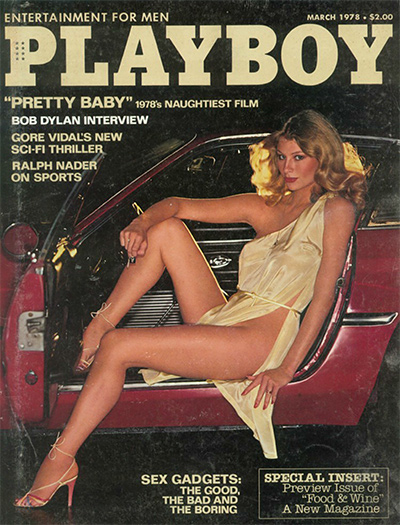
The Playboy Interview (1978)

Standard

1345491405_playboy-march-1978

January 1978 saw the release of Bob Dylan’s second major interview in Playboy (cover dated March), this time with Ron Rosenbaum. This is a vastly, vastly superior interview to the one the Jonathan Cott published in Rolling Stone (you can read a transcript here). Dylan is far less cagey, though there are certainly moments, and he reflects a little bit on his past experiences while also discussing Renaldo and Clara.

It is clear from the interview, and the questions that Rosenbaum raises, that Dylan is still regarded as a figure of the 1960s even by the late-1970s. While it is clear that the interviewer is knowledgeable about the changes that Dylan made to his songs during his tours in 1974 and 1975/6, it is still the Village scene of the early-60s that draws his questions. Dylan isn’t that forthcoming about any of it, really. Reading his interviews is always a frustrating experience because of that.

There are plenty of good moments here, including a discussion of the accessibility of Renaldo and Clara that seems a little off the mark. Dylan also discusses his thoughts on Christianity, and I will return to that when he fully turns his attention to the Gospel period. It was clear, however, that at the time of this interview (late 1977) that he was still a skeptic.

The late-1970s highlights of the piece is the discussion of President Carter, who Dylan had met in 1974, and then this question:

PLAYBOY: Would you say you still have a rebellious, or punk, quality toward the rest of the world?

DYLAN: Punk quality?

PLAYBOY: Well, you’re still wearing dark sunglasses, right?

DYLAN: Yeah.

PLAYBOY: Is that so people won’t see your eyes?

DYLAN: Actually, it’s just habit-forming after a while, I still do wear dark sunglasses. There is no profound reason for it, I guess. Some kind of insecurity, I don’t know: I like dark sunglasses. Have I had these on through every interview session?

PLAYBOY: Yes. We haven’t seen your eyes yet.

Screen Shot 2014-04-28 at 12.42.10 PM

I’m not sure if Dylan and Rosenbaum are talking about “punk” in the way that we assume most musicians in 1978 would be thinking through that term. I take Rosenbaum to mean it that way in the question – in asking about the New York scene and its vitality elsewhere in the interview Dylan claims that the New York scene is dead, and Rosenbaum seems to be sticking up for the new scene in the East Village without actually identifying it as such – but it doesn’t seem that Dylan gets the reference – he segues into talking about Elvis and James Dean.

I think a lot of critics and interviewers wanted to get Dylan’s take on CBGBs and The Ramones, Patti Smith and Talking Heads. Rolling Stone asked him about the new wave bands, he blew them all off, and Playboy seems to sidle up to it without actually asking. Obviously, those bands owe a great debt to Dylan even if they were rejecting what he was all about, but no one seems to be able to nail Dylan down on the topic. It’s likely he just wasn’t very aware of it – he says in this interview that he mostly listens to bluegrass, after all.

“Is Your Love in Vain?”

Standard

Bob-Dylan-Is-Your-Love-In-V-54642

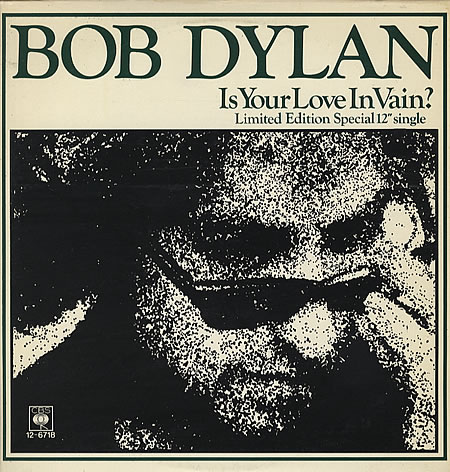
The first of three singles from Street Legal was “Is Your Love in Vain”. Greil Marcus accused this one of sexism, which is kind of funny given how many more of Dylan songs evince a greater distrust for women. Sexist or not, it’s not really that much of a song, and it actually might be the least interesting thing on the album.

Dylan performed this for the first time on February 28, 1978 at one of his Budokan concerts (it makes it onto 1979’s At Budokan from one of those shows). Like a lot of the material on Street Legal, it was written before the Australasian tour at the beginning of the year, and then recorded in the break before the European leg of the tour. It didn’t really survive past the tour either: Dylan played it 31 times in 1978 (out of more than 110 shows) and then never again. It’s another in a long list of Dylan singles that Dylan seemed to lose interest in.

It’s not a terrible song, but it’s too slow and too deliberate, so it comes off as a bit of drudgery. The lines:

I have dined with kings, I’ve been offered wings

And I’ve never been too impressed

Seem sort of like an early attempt at a humbelbrag.

Some live Dylan starting to crop on YouTube in this era for some reason. Here are two very different vocal performances of the same song, the first from Goteborg, Sweden from July 1978 and the second from Toronto in October of the same year.


The Rolling Stone Interview (1978)

Standard

20130401-bob-dylan-rolling-stone-306x-1364849901

Rebecca asked me yesterday “What weird thing are you going to blog about next year?” and I said “I’ll probably write about Bob Dylan again, but try to do a better job of it”. As we near the point where we’ve passed a third of the year, and a third of Dylan’s career, I find that I miss him when he’s not around. Last week was the slowest one for this blog all year, because Dylan did almost nothing: he got divorced from his first wife, Sara, and fought a protracted custody battle for his children, and he edited hundreds of hours of film into the four hour epic, Renaldo and Clara, which would become one of the biggest mis-steps of his entire career.

The year 1978 is a return for Dylan. He will do three tours – Japan (with Australia and New Zealand), Europe, and the United States and play an astonishing 114 concerts during the calendar year. He releases Street Legal, one of his worst received albums, and three singles that go nowhere. He may or may not become a born again Christian this year (his first Gospel Tour begins in November 1979). There’s a lot going on again all of a sudden, and I find myself looking forward to all of it. I also find myself happy to note that there are only a few remaining “dead spots” in Dylan’s career, like 1982, coming up.

To kick off the year, Dylan sat down for a long interview with Jonathan Cott in Rolling Stone (actually conducted at the very end of 1977) dealing with Renaldo and Clara. Since I haven’t yet watched that film, I’ll save the comments about it until I have. The interview is one of the worst Dylan has ever given. I’m not sure that he’s actively trying to be difficult, as he was in the 1960s, or if this is just the way that he really is. I think that there is a general consensus that Dylan’s interviews are mostly put-ons, but reading this one I started to think that maybe he is just really like this all the time. I mean, read Tarantula – his brain seems to fire off in atypical directions.

On the other hand, Cott doesn’t bring much to the whole thing. He has a ton of Dylan quotes laid out in front of him, and some Jewish mysticism and the whole thing just comes across as the worst excesses of the 1970s. For instance, on the death of Jesus (at this point, you have to be attentive to any Dylan Christian references):

“[Jesus was killed] Because he’s a healer. Jesus is a healer. So he goes to India, finds out how to be a healer and becomes one. But see, I believe that he overstepped his duties a little bit. He accepted and took on the bad karma of all the people he healed. And he was filled with so much bad karma that the only way out was to burn him up.”

So, if Dylan was born again by the end of 1977, it was in a particularly strange form of Christianity.

Anyway, it’s a terrible interview. Long and boring and tedious. I imagine it would have made me wary of seeing the film (I’m still wary now…) because the way that these two talk about it is absolutely mind-numbing:

Cott: The poet Robert Bly has written about the image of the Great Mother as a union of four force fields, consisting of the nurturing mother, like Isis (though your Isis seems more ambiguous); the Death Mother (like the woman in “It’s All Over Now, Baby Blue”); the Ecstatic Mother (like the girl in “Spanish Harlem Incident”); and the Stone Mother who drives you mad (like Sweet Melinda who leaves you howling at the moon in “Just like Tom Thumb’s Blues “). Traces of these women seem to be in this film as well.

Dylan:  The Death Mother is represented in the film, but I don’t know what I should say or can say or shouldn’t say about who is who in the movie. I mean who is the old woman everyone calls Mamma — the woman who sings, plays guitar and reads palms? She reads Allen’s palm, saying: “You’ve been married twice.” And me, later on I’m looking at the gravestone marked HUSBAND; Ginsberg asks: “Is that going to happen to you?” And I say: “I want an unmarked grave.” But of course I’m saying this as Renaldo.

Uh huh. Right. Listen, I think we’re going to go see The Bad News Bears Go to Japan instead….

But I don’t think this is a put-on anymore.

“Rita May”

Standard

CBS4859FR2

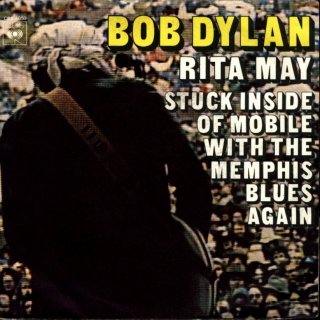
One of the few things Dylan did in 1977 was release “Rita May”, a song recorded during the Desire sessions but left off the album. The song itself is a silly 1950s style rock and roll tune that was covered by Jerry Lee Lewis in 1979, appropriately because it sounds like something Jerry would have sung a quarter century earlier. There’s not much to this one. It is exactly as it promises to be, and that’s about it. Not very Dylanish.

Rita_May-Memphis_Blues_cover

It’s a bit of a poser for me. The cover for the single (above) clearly indicates that it is the b-side of the live version (shortened) of “Stuck Inside of Mobile With the Memphis Blues Again” excerpted from Hard Rain. The UK single cover (below) indicates the same thing, slightly more explicitly.

Bob-Dylan-Rita-May-478479

However, wikipedia insists that this was a non-album single (not a b-side) and there is this single sleeve that would seem to indicate that. So I’m not sure. One of the things that I find a bit odd about researching Dylan, given the vast mountains of information there is on the web about him, is how contradictory so much of this. Obviously, I could spend some time and figure this a-side/b-side thing out for my own, but it’s not like the song really merits the work. It is a useful reminder of not to trust much of anything that you read on the internet (or elsewhere) for face value, to check and double-check. It is also a good reminder of how much more obscure this kind of thing becomes as you move back in time – this is only thirty-five years ago and it’s not immediately clear, so imagine if it was 350 years.

Speaking of not trusting what you read, wikipedia offers these weasel words: “Some listeners believe that the lyrics of the song refer to writer Rita Mae Brown, who had complained of the lack of opportunities for casual lesbian sex.” To their credit they actually cite Dylan Who’s Who for that insightful bit of guesswork. The fact that a) it’s not spelled “Rita Mae” and b) there is nothing in it to suggest that it is about a militant lesbian. I can’t imagine that Dylan ever thought, as Brown did, that heterosexuality was the root of all oppression. I can believe that he’d sing:

Rita May, Rita May

Laying in a stack of hay

Do you remember where you been?

What’s that crazy place you’re in?

I’m gonna have to go to college

’Cause you are the book of knowledge

Rita May

Dylan’s site says that he only performed this once, in New Orleans in 1976. It’s a good performance, but it’s not on video. So here’s The Killer instead: