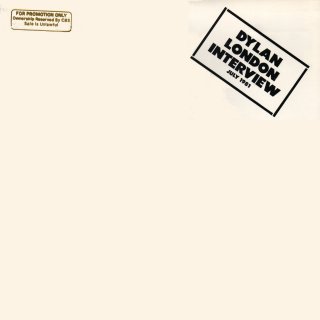
As we arrive in 1981, Ronald Reagan is in the White House and Margaret Thatcher lives at 10 Downing Street. The times they are a-changin’, and not for the better. Let’s check in with Bob Dylan, and see what he has to say about the politics of the times, courtesy of an interview conducted by Dave Herman on 2 July 1981 and broadcast at the end of that month on WNEW radio in New York (transcript here):
Herman: We are sitting in London, and Mrs Thatcher is the prime minister here and back home it seems to be a kind of a new political wave of conservatism sweeping across the world and I wonder if that kind of concerns you at all, if you’ve noticed the change in the political winds?
Dylan: No. I don’t know much change between conservatism or liberalism. I can’t see much differences between either of those things.
The reading of Dylan as a serious left-wing political singer has always been so incredibly partial. For a long time it has been clear that he isn’t and wasn’t interested in organized politics, and by 1981 he seems almost completely disengaged from these sorts of issues. Shot of Love, which I have just started to listen to for the first time this morning, is still mostly a religious album, even if it is a little more eclectic than the previous two (although there are readings of even songs like “Lenny Bruce” as religious, that I’ll try to get to this week). He is still finding his answers in God, so the day to day issues of politics seem to hold little interest for him. He definitely feels like he is a part of the Reagan Democrats phenomenon. On abortion:
Dylan: I don’t know … Now abortion is important, I personally don’t believe in it but …, unless of course somebody needs to have their life saved.
On gun control:
Dylan: But they have a much lower crime rate over here [in England, where the police don’t carry guns] too. Well, you can’t change the States in that kind of way. It’s too many people. It didn’t get off on the right start … You know the United States is like gun crazy, always has been gun crazy. White man used to shoot the Indians with guns. Guns have been a great part of America’s past. So, there’s nothing you can do about it. The gun is just something which America has got, lives with. I don’t think gun control is making any difference at all. Just make it harder for people who need to be protected.
The interview has a lot more going on in it – particularly about the way he views the relative value of live performance relative to his albums – but I found the political issues raised here really fascinating. Dylan is almost forty here, a born-again Christian, and clearly drifting politically to the right. Perhaps it should have been expected?
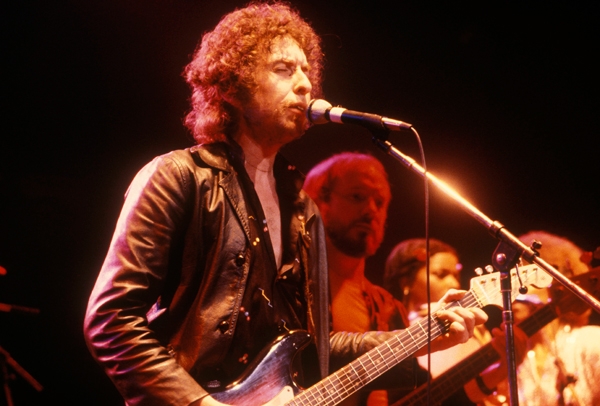
You should hear the ovation. It wells. It rises. It overcomes the crowd. There is a rush that moves through the Fox Warfield Theatre on November 9, 1980 as the assembled onlookers suddenly realize: Bob Dylan is playing a song we know. Bob Dylan is playing a song we like. Bob Dylan is playing “Like a Rolling Stone”! They actually scream with delight all the way through the first line and into the second before they begin to listen to him. Bob Dylan is playing “Like a Rolling Stone”!
For the second year in a row, Dylan did a residency in November in San Francisco. At the first show it opened as his Gospel Tours did: some songs from the back-up singers. His own set begins with “Gotta Serve Somebody” and “I Believe in You”, the same openers from the year before. The crowd is expecting more of the same. Then those opening chords and a sort of “Well, that sounds like, but no it couldn’t be, but, oh holy shit, it really is, I’m going to freak out now and start screaming” reaction to his biggest ever hit. Secular Dylan is back!
It doesn’t last long. He moves on to “Man Gave Names to All the Animals”, “Precious Angel”, and “Ain’t Gonna Go to Hell” but then it happens again: “Girl From the North Country”! The second half of the show is similarly mostly gospel music, but he also does “Just Like a Woman” and “Señor (Tales of Yankee Power)”. The encore is “Blowin’ in the Wind”. Bob Dylan is back, baby!
The whole Warfield residency sounds really good. As I mentioned earlier, 1980 is a great year vocally for Dylan because he believes in what he’s singing. The addition of these, and other, classics into his set completely revitalizes them (again, this is about the fourth time some of these songs have been totally revivified). I didn’t have time to listen to a dozen shows this week, but I really want to. This seems to be really peak material.
A number of the shows are notable for their guest appearances:
12 November has the only ever live performance of “Caribbean Wind”
13 November has the first ever performance of “Groom’s Still Waiting at the Altar” and a guest appearance by Carlos Santana
15 November is a guest slot for Mike Bloomfield on “Like a Rolling Stone”, which, of course, he played on the original album. Bloomfield died a few months after this show of an overdose.
16 November Jerry Garcia plays guitar on about ten songs, the first time (of many) that Dylan and Garcia performed together
19 November has a guest spot by Maria Muldaur
22 November has Roger McGuinn
These shows are still more religious than retrospective. This will be quite different by summer 1981, when, during The Shot of Love Tour, there would be more of his past hits and only a smattering of religious music. This is the beginning of the end of the Dylan gospel phase, although it is clear that his personal spiritual journey was far from over. They are also, for the most part, very good shows (Garcia and Dylan sound a little rough together at times in that show, very muddied. Maybe I just don’t like the Grateful Dead sound).
I have to say, I wound up liking the Dylan of 1980 far more than I ever dreamed I would. There’s been a wide variety of things to hold my interest and things to learn and discover. This was a good year for him. It’s no 1975 (but what is?) but it is far more interesting than, for instance, 1970. I never would have guessed that.
Onward to the Reagan era!
Here’s Dylan and Garcia playing “To Ramona”, the first song that they ever played live together:
Bob Dylan did three Gospel Tours, one in 1979 and two in 1980. The 1979 tour took place in November and early-December, and featured 26 shows in just six cities (almost half the shows took place in San Francisco at the Fox Warfield Theatre). The second tour picked up after Christmas, on January 11, 1980, and ran through February 9. This was 24 shows on a very strange itinerary stretching from the Pacific Northwest then down and across the country to West Virginia (it seems no one had ever seen a map). The third tour, in April and May, covered 27 shows starting in Toronto and then heading into the northeastern United States and ending in the midwest.
Of the shows from these tours that I’ve listened to this week, the best is, without any question, the April 20, 1980 show from Toronto at Massey Hall (the fourth show in that venue, and the fourth of the third tour). This one was professionally recorded by Dylan’s tour, possibly for a documentary that was never produced. The sound recording on the bootleg (The Born Again Music) is exceptional and, unlike a lot of Dylan bootlegs, it includes the entire show, not just the Dylan performance. It would not shock me to find that this would be eventually get an official Bootleg Series release – the quality is that strong.
The shows at this point were pretty consistent in their format. They opened with Terry Young playing piano and Dylan’s back-up singers (Clydie King, Gwen Evans, Mary Elizabeth Bridges, Regina Havis, and Mona Lisa Young) singing six or seven gospel songs. This Toronto show opens with one of them telling a long story about a woman with no ticket who is gonna ride that train with Jesus. It has the feeling of a gospel revival. I like this opening, but Rebecca just said that it got annoying. The crowd is initially enthusiastic, but the applause does calm down to “polite” by about the seventh song before Dylan comes on stage. Rebecca seems typical in this regard.
The crowd at the April 20th show seemed pretty happy with the music that they were served, although that isn’t always the case with other audiences. At the first Toronto show some wag with a bootleg of The Royal Albert Hall yelled “Judas!” at him after “Precious Angel”, and “I don’t believe you!”. Instead of telling his band to “play it fucking loud”, Dylan simply responded: “That’s all right, I wanted to say it anyway”. (Someone at the same show calls out for “If Dogs Run Free”, might be the only time that ever happened). It seems that not everyone read the music press, and knew what was going to happen.
For his part, Dylan generally performed close to the entirety of Slow Train Coming and Saved. At this show he doesn’t do “Covenant Woman”, but he did it the night before. A couple of new religious songs are worked out, including “Ain’t Gonna Go to Hell for Nobody” and “Cover Down, Break Through” (which had its debut at the first Toronto show). He played none of his non-religious music on the tour with the exception of the Pittsburgh show on 16 May, where the band played a fragment of “Lay Lady Lay” and Dylan told the crowd that they would play it if the audience could sing it.
Here’s the thing, though, these were really strong shows. Just listening to Dylan sing “When He Returns” at this moment and he is pouring himself into it. For the first time in years Dylan seems to genuinely care about what he is singing on stage. They’re not just words that he’s written, but words that he believes with all of his being. I think you might have to go back to 1963 or 1964 to hear him sing so much likes he really, really means it.
It’s quite the paradox. These are some of Dylan’s strongest vocal performances, but he isn’t playing the material that most people (including, truth be told, me) would want to hear in such strong versions. Dylan does what he wants. You can go with it, or you can forget about it. I’m obviously going with it.
This show also features Dylan’s longest speech since Arizona, and he actually discusses that show. Here’s the video of that (followed by a great version of “Solid Rock”):
And here’s the text if you want to follow along:
Man asked me on the street today, he said, “Well, if you believe all those things,” he said, “I just can’t seem to love my enemy.” That’s a tough thing to do, you know? That’s an impossible thing to do actually. Cause the natural mind, you know, can’t comprehend that. So if you’re in the natural mind you just can’t comprehend loving your enemy. That seems like a foolish thing to do, and it is. However, the supernatural mind can comprehend that. So when Jesus says “love thy neighbor as thyself,” he wasn’t exactly saying “roll over and play dead.” Actually, I wanna tell you a story here. We were playing in…about four months ago someplace, it was a college campus, I forget exactly where, Arizona, I think it was. Is that where it was? Where you there? All right. Anyway, I read the Bible a lot, you know, I mean it just happens I do and…So it says certain things in the Bible that I wasn’t really aware of until just recently. And, you know, at universities, you know, it’s like…they have a higher learning people there. They teach them different…like philosophies, so people they study all these different philosophies like Plato and who else now? Who? Jimmy Reed. Well, I can’t remember all their names. Nietzsche and those people like that. Anyway, in the Bible it has specific…it tells you specific things and in the Book of Daniel, and in the Book of Revelation, which just might apply to these times here. And it says certain wars are gonna, soon about gonna happen. I can’t say exactly when, you know, but say, pretty soon anyway and…So, at that time, you know, it mentions a country to the furthermost north and it has its symbol: the bear. It’s also is spelt R O S H in the Bible, now, this is written quite a few years ago, so it can’t really but apply to one country that I know. Unless you know another country that it can apply to. Maybe you do, I don’t. But then there’s another country called, I can’t remember what the name of it is, but it’s in the eastern part of the world and it’s got an army of 200 million foot soldiers. Now there’s only one country that that could actually be. So anyway, I was telling this story to these people. I shouldn’t have been telling it to them, I just got carried away. And…I mentioned to them, “Well, you all watch now because Russia is gonna come down and attack the Middle East.” It says this in the Bible. And I been reading all kinds of books my whole life, magazines, books, whatever I could get my hands on, anywhere, and I never found any truth in any of them, if you wanna know the truth. But these things in the Bible they seem to uplift me and tell me the truth. So I said this country is gonna come down and attack, and all these people, there must have been 50,000…[voice of band member): “If there was one.”] If there was one, that’s right. No, I don’t know, there wasn’t 50,000, there was, I don’t know, maybe 3,000, they all just booed. You know, like they usually do, they just booed. I said Russia’s gonna attack the Middle East and they all went “boo”. They couldn’t hear that, they didn’t believe it. And a month, a month later Russia moved their troops into, I think, Afghanistan, it was, and the whole situation changed, you know. I’m not saying this to tell you, you know, that they was wrong and I was right or anything like that. But these things that is mentioned in the Bible I pay mighty close attention to. So it does say that, talking about this man here called Anti-Christ. Now we’ve had a lot of previews of what the Anti-Christ could be like. We had that Jim Jones, he’s like a preview. We had Adolf Hitler, a preview. Anyway, the Anti-Christ is gonna be a little bit different than that. He’s gonna bring peace to the world for a certain length of time. But he will eventually be defeated to. Supernaturally defeated. And God will intervene. But you’re still gonna have to be aware of these things. You need something strong to hang on to. I don’t know what you got to hang on to, but I got something called a solid rock to hang on to that was manifested in the flesh, and justified in the spirit, and seen by angels, preached on in the world.
So, there’s that.
I’m sure that most of this show – perhaps all of it – is available on YouTube. I’ll leave you with this heartfelt version of “I Believe in You”, whose lyrics,
And they, they look at me and frown
They’d like to drive me from this town
They don’t want me around
’Cause I believe in you
Seem to summarize the relation of Dylan and his fans through this entire period.
Sorry for the short posting hiatus – it has been a bit of a crazy week. I’m going to combine the three posts I had scheduled into one mega-post on Saved, the second of Bob Dylan’s Christian albums.
So, first, of all: I had never listened to this album before this week. I am pretty sure that the only song I had ever even heard from this album was “Solid Rock”, which is the penultimate track on the second side of the last disc of Biograph (that collection really spurns this period of his career). Since Sunday I have probably listened to this album more than I listened to any other Dylan album this year (partly because I had an issue migrating some 1980 concert performances to my phone, so it has been my constant companion when I’m riding to and from work or driving in my car). Indeed, for the past several days I have had a number of these songs stuck in my head. This very second I have “Pressing On” running on a loop through my brain.
Let’s get this out of the way: I like this album. I might even really like this album. I know that it’s supposed to be one of his worst, but I don’t agree with that at all (caveat: the version I have, from Complete Album Collection, has been remastered – the original release may have sounded horrible – I don’t know). Let’s take a look.
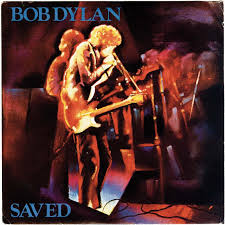
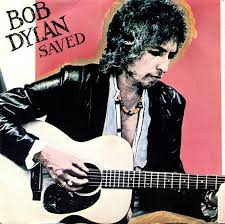
The Cover:
Ok, this is the worst of any Bob Dylan covers. Painted by Tony Wright, I find it garish and horrible. I mean, just generally repulsive. It sort of makes me queasy and uncomfortable. Just the worst thing ever. When the album was re-released it had a new cover, and that’s the cover that can be found on Dylan’s website, so maybe even he doesn’t like it anymore. The new cover is not good, but at least it’s not the original. Wow. Terrible.
The First Single:
“Solid Rock” is probably the best song on the album, so it is unusual that it was picked as a single since Dylan and/or Columbia had a strong habit in the 1970s of releasing some of the worst songs as singles. The guitar part sounds pretty dated now, a product of the end of the 1970s if there ever was one. The lyrics to this don’t tell the story of this song. Here’s how they look written down:
Well, I’m hangin’ on to a solid rock
Made before the foundation of the world
But the way Dylan sings this just slays me. He belts out the “Well, I’m hanging on!”, then a pause for “To a solid rock!” and then the catchy part: “Made” big pause. “Before” big pause. “The foundation” big pause. “Of” big pause” “Of the world!”. It’s almost chanted by him and the background singers. For some reason, I love this.
The verses aren’t very good (“nations are angry, cursed are some”) but that chorus gets me every time! This song charted nowhere in the whole world.
The Second Single:
“Saved”, the title track, is my second favourite song on the whole album. They were on a roll!. This is a happy, poppy, gospel tune: “And I’m so glad, Yes, I’m so glad, I’m so glad, So glad, I want to thank You, Lord, I just want to thank You, Lord, Thank You, Lord!”. I can’t believe that people actually dislike this song. Yes, you can find similar gospel songs done just as well, and a whole lot better, but a lot of gospel groups, but that doesn’t mean that happy Dylan isn’t worth listening to.
The Rest:
The album opens with one of its weaker tracks, the cover of Red Hayes and Jack Rhodes’ “A Satisfied Mind”. This has been done better elsewhere. It then leaps into “Saved”, and actually this song is probably all the better because it is such a departure from “A Satisfied Mind”. From a certain perspective the first song isn’t so much a throw away as it is a set-up for the better song.
“Covenant Woman” is definitely the song I like least on the album. It has never clicked for me. I can’t sing it right now, and I can’t come to terms with the phrasing. Lyrically it’s scrawny and as a love song it’s one of his weakest. “What Can I Do for You?”, which is another love song to God, puts it in its place. This is really quite a lovely song, even though the orchestration is a little dated now. The harmonica piece at the end, which is entirely played at the high end of the register, is a bit reedy, but it is also some of his best playing in years. The thin, plaintive notes that come right at the end when the music drops out, may in fact be the best harmonica playing that he has done on any of his albums yet.
“Pressing On” is a song that he used to end a lot of his shows in 1980. It’s an above average song, that starts slow and becomes really great by the conclusion. “In the Garden” is another one that has really become stuck in my head all week, and which I think is probably under-valued because its message is so bluntly Christian. The exact same can be said of “Saving Grace”. The final song, “Are You Ready?”, is one that I don’t think works very well – musically this one may be the most dated thing on the whole album.
It occurred to me this morning that if this album had been released by an unknown it would have been praised as a great mix of Dylanish stylings and gospel, but since it was by Dylan this is considered a complete failure (two stars from AllMusic, the shortest Wikipedia entry of any Dylan album ever). I don’t think so. If you actually listen to this one with an open mind, it is a really good album. The fact that it is a really good Christian album seems to be its main problem. God help me, but I like it!
As I go to Dylan’s site literally everyday, I was shocked to suddenly be confronted with “Full Moon and Empty Arms”, a Frank Sinatra cover that will apparently be included on a new album to be released later this year! Huzzah! I won’t say anything more about this song or album until the last week of December when I get to 2014, but I am thrilled that this dumb little project will have something to talk about at the end of the year other than the Chrysler ad!
It might seem improbable, but it took until 1980 for Bob Dylan to win his first Grammy*. Even more improbably, it came for the vocal performance on “Gotta Serve Somebody”. That Dylan would have never won as a songwriter but would win as a singer is a shock. That he won for what is about his fortieth best vocal performance is even odder. Well, the Grammys never have been a particularly credible award.
Dylan had lost his share of Grammys before 1980. Two of note were the fact that he lost Best Folk Recording in 1963 (for his first album, Bob Dylan) to Peter, Paul and Mary’s If I Had a Hammer (that a defensible decision) and then again in the same category in 1965 (The Times They Are A-Changin’), to Gale Garnett for “We’ll Sing in the Sunshine” (the Grammys seemed to have pitted albums against singles in those days). I have to be honest and admit that I had never heard of Garnett prior to this morning, though, of course, I know the treacly song well. In 1969 he lost Best Folk Performance (John Wesley Harding) to Judy Collins’ “Both Sides Now” (again, defensible). The next year he lost Best Country Instrumental Performance (“Nashville Skyline Rag”) to The Nashville Brass.
The nomination in 1980 was only his sixth ever, and, his first win. Astonishing. Dylan and his band performed this song at the show in tuxedos and black gowns, and he received an enthusiastic standing ovation (Kris Kristofferson is positively beaming). You can watch the video of the performance here.
This is actually a rather good live performance of the song that is quite indicative of the way that Dylan was performing it live that year (far superior to the SNL version). The only video of him actually accepting the award that I could find was on the Grammys site – it is about one second long but you can see it here (plus the Doobie Brothers!).
I’m not sure what to make of all this. Good live performance, bizarre thing for him to win. For the record, this was the first time that an award was made in this category and he beat out Joe Jackson (“Is She Really Going Out With Him?”), Robert Palmer (“Bad Case of Loving You”), Rod Stewart (“Blondes Have More Fun”), and Frank Zappa (“Dancin’ Fool”). Quite the bizarre range of nominated material.
*technically he shared a Grammy for his contribution to Concert for Bangladesh, but I’m going to discount that since it really wasn’t his project.
Here’s the Grammy performance by Gale Garnett, she’s better than The Times They Are A-Changin’:
“Oh, yes, that’s right, they want the old stuff. But the old stuff’s not going to save them and I’m not going to save them. Neither is anybody else they follow. They can boogie all night, but it’s not gonna work.” So said Bob Dylan in one of his 1980 interviews. A few more interviews pop up in this year than did in 1979, and they shed a good deal more light on where he was at.
In an interview that originally ran in New Zealand (of all places), Karen Hughes revealed that Dylan attended “the Assembly of God, a fundamentalist, pentecostal, evangelical denomination that believe in the literal Bible and speaking in tongues”. So there’s that. Assemblies of God (the NZ paper has it wrong) was the faith of both Elvis and Jerry Lee Lewis as well, although I have to think that was a coincidence.
He also connected his current faith to the work that he had always done: ““I guess He’s always been calling me”, Dylan said gently. “Of course, how would I have ever known that? That it was Jesus calling me. I always thought it was some voice that would be more identifiable. But Christ is calling everybody; we just turn him off. We just don’t want to hear. We think he’s gonna make our lives miserable, you know what I mean. We think he’s gonna make us do things we don’t want to do. Or keep us from doing things we want to do”.
In a separate interview from May 16, 1980, Dylan reflected on the older work that he was, at the time, no longer interested in playing live: “Oh, yeah, I love that stuff. I look at it now and it amazes me that it was me that even wrote it or performed it.”
1980 is the peak year of Dylan’s religious period – or at least the peak of his public profession of his faith. Saved, which I’m just now listening to for the very first times, is much more explicit in its religiosity than was Slow Train Coming. As I type this, I am midway through my second ever listening to this album as I am stuck on a plane to Calgary from Toronto that has a broken entertainment system; I may listen to it five or six times on this one flight. Musically it strikes me as a far superior album, and one of the best-produced albums Dylan has done in quite some time. But I’m not really listening to the lyrics yet at this point, so I’m not sure what I’ll think of it as an album when all is said and done.
The quote I probably liked best from the 1980s interviews was this: “It would have been easier”, he sighed “If I had become, or a Buddhist, or a Scientologist or if I had gone to Sing Sing”. This is completely true. Of all the things he probably could have done to alienate his audience at the end of the 1970s, Christianity was the biggest. Imagine how cool he would’ve seemed if he’d gone to prison!
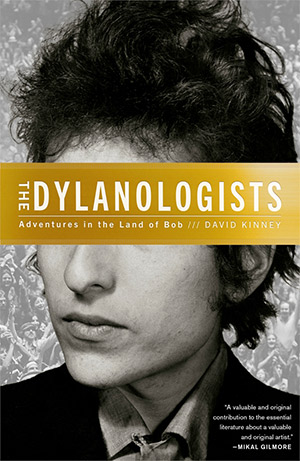
Slate has a review up this morning of David Kinney’s new book about people who are obsessed with Bob Dylan. Do you think that I should read it? I’m offended to not have been interviewed!
I just ordered it – should have it by the end of the week (May 13th release date in Canada).
1979 was not a big year for Dylan as a live performer, relatively speaking. After the enormous world tour of the previous year, he performed “The First Gospel Tour” (of three). This began with an epic fourteen day residency at the Fox Warfield Theatre in San Francisco from the 1st to the 16th of November. From there he performed four shows in Santa Monica for World Vision International, and then a further eight shows on the road in California, New Mexico and Arizona.
All of the Dylan shows during this period were pretty close to the same thing: He generally performed the same seventeen gospel songs in the same order every night, with only the slightest possible variation. He never played a single song from any of his previous albums, which must have been tough for people who didn’t know that going into the show. I’m sure that there are people out there who have listened to every single bootleg and who can point to very fine distinctions between the shows, but that’s not going to be me. There is an old AngelFire website dedicated to this tour here – it has transcriptions of a lot of his stage patter, including his description of having the cross thrown on stage in San Diego the year before.
What I listened to this week was the contrast between two shows. I listened repeatedly to one of the Santa Monica shows. This has an appreciative audience – he is playing for a religious crowd who know that they have come to see a gospel show. Generally, the band is tight, Dylan is in good form, the venue is intimate enough to provide good sound. It’s a really good show – if you’re into the music from Slow Train Coming and Saved, which all in all I’m really not. It’s a genuinely strong performance of music that I’m not interested in much at all.
The striking counter-example is the second Tempe, AZ show on November 26. Dylan performs only two songs before he loses the crowd. During his introduction to his third song of the night, “When You Gonna Wake Up?” there is hooting and hollering and general noisiness. Dylan goes off. Listen to it right here, and the transcript (courtesy Bjorner) is below:
Dylan: “Well. What a rude bunch tonight, huh? You all know how to be real rude. You know about the spirit of the anti-Christ? Does anybody here know about that? Well, it’s clear the anti-Christ is loose right now, let me give you an example. You know, I got a place out, ah, somebody stopped by my house and gave me this, uh, tape cassette. Some of these kind of people, you know, there’s many false deceivers running around these days. There’s only one gospel. The Bible says anybody who preaches anything other than that one gospel, let him be accursed. [“Rock-n-roll!”] Anyway, you know, this fellow stopped by my house one time and wanted to, so called, “turn me on” to a . . . well I’m not gonna mention his name, he’s a certain guru. I don’t want to mention his name right now, but ah, he, he has a place out there, near LA [“Malibu!”] And ah, he stopped by and he gave me this taped cassette to show me … [“Rock-n-roll!”] … You wanna rock-n-roll you can go down and rock-n-roll. You can go see Kiss and you rock-n-roll all your way down to the pit. Anyway, let me give you an example here. I’m gonna give you a real good example, I took a look, I dropped this tape cassette off with a friend of mine. [lots of heckling and others trying to shout the hecklers down] Turn the lights on in here. I want to see these people. Turn some lights on. Give them some light. Let them in the light. [applause] So anyway, this certain guru, you wanna hear about this guru? So anyhow, [“Rock-n-roll!” “Shut up!”] All right, so this guru, he made a film of himself. He had one of these big conventions. He does have a convention I think every so often like once a month, he’ll go to a big city. [“Praise the lord with puke!” “Shut that guy up!” Applause] Now, so, I took a look at this tape, and sure enough he was having himself a big convention. He had, must have had five thousand to ten thousand people there. Eight thousand people. And what he was doing on the stage was, he was sitting on there with a lot of flowers and things. And he sure did look pretty though. He’d sit up there, you know like kind of like on a throne and you’d listen to him talk on the tape. And on the tape, he said, you know, what’s life all about is life is to have fun. He said, “I’m gonna show you now how you all can have fun.” And he had a big fire extinguisher there and he put colored water in this fire extinguisher, and he would spray it out on the people. And they all laughed and just had a good time. They took their clothes off. They were overjoyed to be sprayed by this man. [Booooo!] And a little while after that, he started talking about his philosophy. And he said that he was God — he did say that. He said that God’s inside of him and he is God. And, you know, that those people could just think of themselves as God. I want to tell you this because there’s many of these people walking around. They might not come right out and say they’re God, but they’re just waiting for the opportunity too. And there is only one God. And let me hear you say who that God is? [mixed shouts] Their God, he makes promises that he doesn’t keep. There’s only two kinds of people like the preacher says — only two kinds of people. Color don’t separate them, neither does their clothes … [Rock-n-roll!] … You still want to rock-n-roll? I’ll tell you what the two kinds of people are. Don’t matter how much money you got, there’s only two kinds of people: There are saved people and there’s lost people. [applause] Yeah. Now remember that I told you that. You may never see me again. I may not be through here again, you may not see me, sometime down the line you’ll remember you heard it here. That Jesus is Lord. And every knee shall bow to him.
You’re rarely going to hear a recording of a more fundamental and deep-seated disconnect between performer and fans. Dylan’s anger sort of grows during the show as the heckling never ends. He goes off on an even longer lecture later in the show, informing them about the impending apocalypse that will drag America into the end times. No one is really listening though. Here’s that one:
How many people here are aware that we’re living in the end of times right now? How many people are aware of that? Anybody wanna know that? Anybody interested in knowing that we’re living in the end times? How many people do know that? Just, yell out or do something. How many people don’t know that. Well, we are, we’re living in the end times. [“The times they are-a changin!”] That’s right. I told you that. I told you “TheTimes They Are A-Changin” twenty years ago. And I don’t believe I’ve ever lied to you. I don’t think I said anything that’s been a lie. I never told you to vote for nobody. Never told you to follow nobody. Well, I’ll tell you a story about that now. When Jesus saw this woman, they all wanted to stone her. Because, you know, she was an adulteress. So they come by and they wanted to stone her. And they said to Jesus, they said, “Master” they said, they wanted to trick him, you know, so they said, “What say you? What do you say there, should we stone this woman? Because she has been an adulterer?” And he says, “Well, let him who is without sin cast the first stone.” They all just dropped their stones and they walked away. And then he said to the woman, he said “Woman,” he said, “You’re free now. You go and sin no more.” And the woman left. Well, let me tell you, that the devil owns this world. He’s called the God of this world. Now we’re living in America. I like America just as much as everybody else does. I love America, I gotta say that. But America will be judged. You know, God comes against a country in three ways. First way he comes against them, he come against them in their economy. Did you know that? He messes with their economy the first time. You can check it all the way back to Babylon, and Persia and Egypt. Many of you here are college students aren’t you? Many of you are college students. You ask your teachers about this now. You see, I …uh .. I know they’re gonna verify what I say. Every time God comes against a nation, first of all he comes against their economy. If that doesn’t work, he comes against their ecology. It ain’t nothing new that’s happening. He did it with Egypt. He did it with Persia. He did it with Babylon. He did it with the whole Middle East. It’s desert now. It used to be flourishing gardens. All right. If that don’t work, if that don’t work, he just brings up another nation against them. So one of those three things has got to work. Now. Jesus Christ is that solid rock. He’s supposed to come two times. He came once already. See, that’s the thing, he’s been here already. Now, he’s coming back again. You gotta be prepared for this. Because, no matter what you read in the newspapers, that’s all deceit. The real truth is that he’s coming back already. And you just watch your newspapers. You’re gonna see, maybe two years, maybe three years, five years from now, you just watch and see. Russia will come down and attack in the Middle East. China’s got an army of two hundred million people. They’re gonna come down in the Middle East. There’s gonna be a war called the “Battle of Armageddon” which is like some war you never even dreamed about. And Christ will set up his kingdom. He will set up his kingdom and he’ll rule it from Jerusalem. I know, as far out as that might seem, this is what the Bible says. [“Everybody must get stoned!”] I’ll tell you about getting stoned. What do you want to know about getting stoned? [Mixed shouts] Alright, what you’re gonna need is something strong to hang on to. You got drugs to hang on to now. You might have a job to hang on to now. You might have your college education to hang on to now. But you’re gonna need something very solid to hang on to when these days come. Let me tell you one more thing. When Jesus spoke his parables, he spoke them to people, he said, he said parables to all these people. Everybody could hear the parables. Everybody heard the same parables. Some people understood them and some people didn’t. But he said the same one, he said the same thing to everybody. You understand, he didn’t try to hide them, he just said it. Those that believed it, believed it and understood it, and those that didn’t, didn’t. That’s right. We’re gonna play a song now called “Hanging On to a Solid Rock, Made Before the Foundation of the World.” Now remember now, you talk to your teachers about what I said. I’m sure you’re paying a lot of good money for your education now, so you better get one.
Unlike the KMEX interview, here we get some genuine sense of what it is that Dylan actually believes, straight from his own mouth, and we get considerable pushback from some angry fans who want to hear his older songs. Sorry, pal, you can call out all the titles you want, but Dylan doesn’t play that anymore.
From what I can tell, Bob Dylan only granted one interview in 1979. Unfortunately it’s not a very good one, but it is his earliest statement about his Christian beliefs (other than the music). Recorded on December 7, 1979 for KMEX, a radio station in Tucson, AZ, it was conducted by Bruce Heiman. It seems that it was occasioned by the determination of the Tucson chapter of American Atheists to picket Dylan’s performance in the city the next night. The problem with the interview is that Heiman is struggling to understand exactly what the Atheist group wants to accomplish or what it is that they actually believe. It is also clear that Dylan doesn’t know, so you have an interviewer and interviewee trying to get to the heart of American Atheism in the 1970s, not very successfully.
Here’s how Heiman characterizes their press release: “We got a press release from the Tuscon chapter of the American Atheists and they said in response to your recent embrace of the born-again Christian movement they plan to leaflet your upcoming concert. They say they recognize the need to inform those in the audience that the new Dylan cause-celebre is a repressive and and reactionary ideology and that members intend to draw attention to the contradictions between the previous content of your art form and the message which your songs now expound.”
First, it made me wonder if American Atheists continue to send out press releases about Christian rock stars to this day, or was this a particular function of the late-1970s?
But we’re not here to blog about Madelaine Mary O’Hare and her followers. What does Dylan have to say about his faith? That’s what we want to know. It’s pretty straightforward and pretty direct. When Heiman suggests that the Atheists are against any sort of religion he responds:
Dylan: Well, Christ is no religion. We’re not talking about religion … Jesus Christ is the Way, the Truth and the Life.
A little later, when Heiman avers that the Atheists believe that all religion is repressive, he responds:
Dylan: Well, religion is repressive to a certain degree. Religion is another form of bondage which man invents to to get himself to God. But that’s why Christ came. Christ didn’t preach religion. He preached the Truth, the Way and the Life. He said He’d come to give life and life more abundantly. He talked about life, not necessarily religion …
Finally, when confronted with the notion that he has adopted a new ideology:
Dylan: Well, this ideology isn’t my ideology either. My ideology now would be coming out of the Scripture. You see, I didn’t invent these things – these things have just been shown to me. I’ll stand on that faith – that they are true. I believe they’re true. I *know* they’re true.
Most of the rest is just two guys talking past each other about atheism. You can read a transcript of it here. It’s short. I feel sort of cheated by this interview, because it is clear that Heiman isn’t prepared to get to the heart of what Dylan believes, and he’s a poor stand-in for someone who might want to challenge Dylan on any of this.
That said, it is instructive to a degree. It is clear that the betrayal that many of Dylan’s fans felt at this moment was real and palpable, and it is also clear that Dylan really and truly does not care. It would be idiotic to suggest that his new-found faith was not one hundred per cent legitimate. He would do three tours (one in 1979, two in 1980) without playing any of his secular songs. He very clearly is hoping to win over some of his former fans to his way of thinking. He is hoping that his music will lead others to see the light.
This was an interview where everybody seemed to come off confused.






 LongAndWastedYear